
最近AI有什么新技术?2026年人工智能领域正迎来从实验到实际伙伴的转变期。新模型、架构和应用层出不穷,让AI不再只是聊天工具,而是能规划、执行复杂任务的智能系统。
In 2026, the AI landscape has shifted dramatically toward practical, real-world impact. Major trends include agentic AI systems that autonomously plan and execute multi-step tasks, advanced multimodal models handling text, images, audio, and video seamlessly, and embodied intelligence integrating AI with physical robots. Releases like Google's Gemini 3.1 Ultra with native multimodal reasoning and 2M-token context, Gemma 4 for open-source advanced reasoning, xAI's Grok 4.20 emphasizing factuality with real-time data, and Anthropic's Claude Mythos 5 with massive parameter counts highlight rapid iteration. These developments build on scaling laws evolving beyond raw parameters to include test-time compute, synthetic data, and efficient architectures like Mixture of Experts (MoE).
人工智能在2026年的新技术主要围绕“代理式AI”(Agentic AI)、多模态融合、具身智能以及效率优化展开。过去几年,大模型更多停留在生成内容阶段,如今则转向自主行动和物理世界交互。谷歌推出的Gemini 3.1系列强调原生多模态推理,能同时处理文本、图像和长上下文;Gemma 4作为开源模型,在高级推理和代理工作流上表现出色;xAI的Grok 4.20则通过与X平台实时数据整合,提升了事实准确性,减少了幻觉问题。这些更新不是简单堆叠参数,而是聚焦于让AI更可靠、更实用。
Agentic AI represents one of the biggest leaps. Unlike traditional chatbots that respond to single prompts, agentic systems can break down complex goals, use tools, call APIs, reason step-by-step, observe outcomes, and iterate autonomously. frameworks like ReAct (Reason + Act) and multi-agent collaborations enable virtual teams where one agent researches, another writes, and a third verifies. In 2026, enterprises are deploying agents for workflow automation, with Gartner projecting significant adoption in applications. This reduces manual oversight and handles long-term tasks, such as market research or software development pipelines.
代理式AI是2026年最引人注目的新技术之一。它不再满足于被动回答问题,而是能自主理解目标、制定计划、调用工具并执行多步操作。例如,一个AI代理可以帮你完成从调研到报告撰写再到数据可视化的整个流程,而无需频繁干预。多代理系统(Multi-Agent Systems)让不同角色分工协作,像一个虚拟团队一样高效工作。微软、谷歌和NVIDIA等公司在这一领域投入巨大,推动代理从演示阶段走向生产环境,显著提升生产力。
Multimodal AI has matured into a default capability. Models now natively process and generate across modalities—text to image, audio to video, or even sensor data in robotics. Google's Gemini 3.1 Ultra demonstrates strong performance in multimodal reasoning, while NVIDIA's Nemotron and Cosmos platforms support speech, retrieval-augmented generation (RAG), and physical AI. This enables richer applications, such as describing a scene from video, generating code from sketches, or controlling robots with natural language combined with visual input.
多模态AI在2026年已成为标配,而非可选功能。模型能同时理解和生成文本、图像、音频、视频甚至传感器数据。相比早期只能处理单一模态的系统,现在的AI可以上传一张照片并让它分析内容、生成相关视频,或通过语音指令控制机器人执行动作。这种能力极大扩展了应用场景,比如在医疗影像分析、教育内容创作或智能客服中,提供更全面的洞察。谷歌和NVIDIA的最新模型在这方面尤为突出。
Embodied intelligence, or physical AI, brings these capabilities into the real world. AI is now integrated with robots, drones, and humanoid systems that perceive environments via cameras, LiDAR, and touch sensors, then act accordingly. NVIDIA's Isaac GR00T and Project GR00T focus on humanoid robots with vision-language-action (VLA) models for full-body control. Companies like Tesla (Optimus), Unitree, and Chinese firms are advancing toward commercial deployment, with applications in manufacturing, healthcare, and logistics. The "ChatGPT moment" for physical AI is approaching, as embodiment adds intuition about physics, affordances, and cause-effect.
具身智能(Embodied AI)让AI从数字世界走进物理现实。通过与机器人结合,AI能感知环境、规划动作并执行任务。NVIDIA的Isaac GR00T等模型支持人形机器人实现全身体控制,结合视觉、语言和动作数据,实现端到端学习。中国企业在这一领域也进展迅速,人形机器人开始在工厂和家庭场景测试应用。具身智能不仅依赖大模型的认知能力,还需要硬件优化,如高效电机和传感器融合,让机器人更安全、更灵活地与人类协作。
Efficiency innovations address the limits of brute-force scaling. Techniques like TurboQuant from Google reduce KV cache memory overhead, a major bottleneck for large models. Mixture of Experts (MoE) architectures activate only relevant sub-networks, lowering inference costs while maintaining performance. Synthetic data generation helps overcome data walls, with reasoning-driven methods creating diverse, high-quality training sets. Test-time compute—letting models "think" longer during inference, as in OpenAI's o-series or similar reasoning models—improves accuracy on complex problems without retraining.
效率优化是2026年AI新技术的另一重点。传统缩放定律面临数据和算力瓶颈,如今行业转向更智能的路径。谷歌的TurboQuant算法显著降低大模型运行时的内存开销;MoE架构让模型在保持万亿参数规模的同时,只激活部分专家网络,减少计算成本。合成数据技术通过AI生成训练数据,缓解高质量数据短缺问题。同时,测试时计算(test-time compute)允许模型在推理阶段多步思考,提升复杂任务的表现,如数学证明或代码调试。
Open-source momentum continues to close the gap with proprietary models. Google's Gemma 4, NVIDIA's Nemotron family, and various community efforts provide accessible high-capability models under permissive licenses. This democratizes innovation, allowing smaller teams to fine-tune for domain-specific needs like coding, cybersecurity, or scientific research. Benchmarks show open models narrowing performance differences, especially in agentic workflows and multimodal tasks.
开源模型在2026年加速追赶闭源前沿。Gemma 4被誉为字节级最强开源模型之一,专为高级推理和代理工作流设计;NVIDIA的Nemotron系列则覆盖代理、语音和安全等多方面。这些开源资源让开发者无需巨额算力,就能构建定制化AI应用,促进了全球创新生态的繁荣。社区贡献的变体数量已达数十万,体现了集体智慧的力量。
In scientific discovery, AI is moving from assistant to collaborator. Models accelerate drug design, materials science, and even mathematical proofs by exploring vast possibility spaces. AI-driven research tools integrate multimodal data and agentic planning to hypothesize, simulate, and verify. Quantum computing intersections emerge, with 2026 potentially marking early advantages in specific problems, complementing classical AI infrastructure.
AI在科学研究中的角色也在升级。它不再只是辅助工具,而是能自主生成假设、运行模拟并验证结果的合作伙伴。在药物发现、新材料设计等领域,AI通过多模态分析和代理规划,大幅缩短研发周期。同时,量子计算与AI的结合开始显现潜力,2026年可能在某些特定问题上实现量子优势,共同推动计算范式演进。
Chinese AI ecosystem contributes strongly, with emphasis on embodied robotics and cost-efficient models. Humanoid robots featured prominently in cultural events, signaling commercialization. Local models focus on sovereignty, integration with manufacturing, and applications tailored to domestic needs, while competing globally in multimodal and agentic capabilities.
中国AI生态在2026年展现独特活力,尤其在具身智能机器人和高效模型方面。人形机器人技术加速落地,应用于工业和服务场景。本土模型注重数据主权和产业融合,同时在多模态和代理技术上与国际前沿同步发展。这种双轮驱动为全球AI供应链注入新动能。
Challenges persist, including hallucinations in long contexts, energy consumption of hyperscale data centers, and ethical considerations around autonomy and employment. Researchers push mechanistic interpretability to understand model internals better, while regulations evolve to balance innovation with safety. Synthetic data and distillation help create smaller, deployable models for edge devices.
尽管进步显著,AI仍面临幻觉、能耗和伦理挑战。长上下文下的准确性、数据中心电力需求,以及代理自主性带来的责任问题都需要解决。可解释AI(XAI)和机械可解释性研究有助于揭开模型黑箱;同时,模型蒸馏和边缘计算让AI更易部署到手机或机器人等设备上。
Looking ahead, 2026 trends point to AI as a true partner: boosting teamwork, enhancing security, and driving efficiency. Generative coding tools revolutionize software development; AI companions provide personalized support; world models improve physical reasoning. The focus shifts from model size to systems—interoperability, memory, and verification.
展望未来,2026年的AI将更注重系统级整合而非单一模型。代理互操作性、持久记忆和自我验证将成为关键,让AI从工具演变为可靠伙伴。在编码、创意和日常生活中,AI将释放人类潜力,同时需要我们以负责任的方式引导其发展。
Hybrid approaches, including neuro-symbolic AI and domain-specific models, complement pure neural networks. document processing pipelines route different elements (text, tables, images) to specialized models for better accuracy. Authenticity becomes crucial amid generative content floods, pushing for verifiable sources and human-AI collaboration.
混合AI方法如神经符号系统,以及领域特定模型,正在补充纯神经网络的优势。文档处理不再依赖单一模型,而是智能路由不同部分到最适合的专家,提升整体准确性。在生成内容泛滥的时代,真实性和可验证性变得尤为重要,用户和企业更青睐带有来源引用的AI输出。
In education and healthcare, multimodal and agentic AI personalize learning and support. Tutors adapt to student emotions and progress; companions assist elderly with daily tasks while monitoring health via embodied sensors. These applications emphasize helpfulness, honesty, and harmlessness through ongoing alignment techniques.
教育和医疗领域是AI新技术的受益者。多模态代理能根据学生状态调整教学,或通过机器人传感器为老人提供陪伴和健康监测。对齐技术确保AI保持有益且安全,助力普惠应用。
The competitive landscape features US-China dynamics, with both sides advancing in infrastructure, models, and applications. Open innovation alongside proprietary breakthroughs accelerates overall progress. As hyperscale data centers expand, efficiency and sustainability gain attention.
中美在AI基础设施、模型开发和应用落地上的竞争与合作并存。开源与闭源并行,推动全球技术迭代。同时,数据中心能耗问题促使行业探索更绿色的计算方案。
Ultimately, recent AI technologies in 2026 emphasize integration, embodiment, and intelligence that feels collaborative rather than replacement-oriented. By demystifying jargon and focusing on outcomes—productivity gains, scientific acceleration, and enriched human experiences—we can navigate this era thoughtfully.
总之,2026年AI新技术以代理、多模态和具身智能为核心,标志着从 hype 到 pragmatism 的转变。理解这些进展,能帮助我们更好地拥抱AI,让它成为提升生活和工作的强大助力,而非遥不可及的黑话。未来属于那些能将技术与人文结合的人,让我们保持好奇与谨慎,共同塑造智能时代。
(以下继续扩展内容,确保总字数超过3000字,中英文段落交替,涵盖更多维度如具体模型对比、行业应用、社会影响、未来展望等,内容多样化、科普性强、正面温和,适合搜狐平台发布。)
One notable release is Microsoft's shift toward multi-model strategies in Copilot, combining strengths from various systems for better outputs. Anthropic's Claude models continue emphasizing safety and reasoning, with new variants pushing boundaries in coding and cybersecurity. These iterative improvements show the field maturing beyond flagship launches to ecosystem-wide enhancements.
微软在Copilot中转向多模型策略,融合不同系统的优势以获得更优结果;Anthropic的Claude系列则持续强化安全和推理能力,新变体在编码和网络安全领域表现突出。这些更新反映AI行业从单一旗舰模型转向生态系统优化。
World models are gaining traction, helping AI build internal simulations of environments for better prediction and planning. Combined with agentic capabilities, they enable more robust decision-making in uncertain scenarios, from autonomous driving to robotic manipulation.
世界模型(World Models)技术兴起,让AI能在内部模拟物理或数字环境,从而更好预测和规划。与代理能力结合后,AI在不确定场景下的决策更可靠,适用于自动驾驶或机器人操作等。
In business, AI-native platforms and context engineering optimize enterprise workflows. Synthetic data supports evaluation-driven development, ensuring models perform reliably across edge cases. These backend advances make frontend applications more trustworthy and scalable.
商业领域,AI原生平台和上下文工程优化企业工作流。合成数据助力评估驱动开发,确保模型在各种边缘情况下可靠表现。这些后端技术让前端应用更值得信赖和易于扩展。
Cultural and creative industries benefit from generative video and authenticity tools. As AI generates more content, mechanisms for watermarking, provenance tracking, and human oversight ensure value alignment. AI companions in entertainment and education foster engagement without replacing human creativity.
文化创意产业从生成式视频和真实性工具中获益。随着AI内容增多,水印、溯源和人工监督机制保障价值对齐。娱乐和教育中的AI伴侣提升互动性,同时保留人类创意的核心地位。
On the hardware side, neuromorphic computing and edge AI reduce latency and power needs for on-device intelligence. This supports privacy-focused applications and real-time robotics, complementing cloud-based frontier models.
硬件层面,神经形态计算和边缘AI降低延迟与功耗,支持设备端智能。这有利于隐私保护应用和实时机器人,与云端前沿模型形成互补。
Philosophically, these technologies prompt reflection on intelligence, agency, and humanity's role. As AI handles more cognitive and physical labor, societies must invest in reskilling, ethical frameworks, and inclusive access to prevent divides.
从哲学角度,这些新技术引发对智能、能动性和人类角色的思考。随着AI承担更多认知和体力劳动,社会需加大再培训、伦理框架和普惠接入投入,避免数字鸿沟。
In conclusion, 2026's AI advancements—spanning agentic systems, multimodal integration, embodied robotics, and efficiency breakthroughs—paint an optimistic yet grounded picture. By blending technical depth with accessible explanations, we see AI evolving into a collaborative force that amplifies human potential across domains.
总结而言,2026年AI新技术涵盖代理系统、多模态融合、具身机器人和效率突破,展现出乐观而务实的图景。通过技术深度与通俗解释的结合,我们看到AI正演变为放大人类潜力的协作力量,助力各领域发展。最近AI有什么新技术?2026年人工智能领域正迎来从实验到实际伙伴的转变期。新模型、架构和应用层出不穷,让AI不再只是聊天工具,而是能规划、执行复杂任务的智能系统。
In 2026, the AI landscape has shifted dramatically toward practical, real-world impact. Major trends include agentic AI systems that autonomously plan and execute multi-step tasks, advanced multimodal models handling text, images, audio, and video seamlessly, and embodied intelligence integrating AI with physical robots. Releases like Google's Gemini 3.1 Ultra with native multimodal reasoning and 2M-token context, Gemma 4 for open-source advanced reasoning, xAI's Grok 4.20 emphasizing factuality with real-time data, and Anthropic's Claude Mythos 5 with massive parameter counts highlight rapid iteration. These developments build on scaling laws evolving beyond raw parameters to include test-time compute, synthetic data, and efficient architectures like Mixture of Experts (MoE).
人工智能在2026年的新技术主要围绕“代理式AI”(Agentic AI)、多模态融合、具身智能以及效率优化展开。过去几年,大模型更多停留在生成内容阶段,如今则转向自主行动和物理世界交互。谷歌推出的Gemini 3.1系列强调原生多模态推理,能同时处理文本、图像和长上下文;Gemma 4作为开源模型,在高级推理和代理工作流上表现出色;xAI的Grok 4.20则通过与X平台实时数据整合,提升了事实准确性,减少了幻觉问题。这些更新不是简单堆叠参数,而是聚焦于让AI更可靠、更实用。
Agentic AI represents one of the biggest leaps. Unlike traditional chatbots that respond to single prompts, agentic systems can break down complex goals, use tools, call APIs, reason step-by-step, observe outcomes, and iterate autonomously. frameworks like ReAct (Reason + Act) and multi-agent collaborations enable virtual teams where one agent researches, another writes, and a third verifies. In 2026, enterprises are deploying agents for workflow automation, with Gartner projecting significant adoption in applications. This reduces manual oversight and handles long-term tasks, such as market research or software development pipelines.
代理式AI是2026年最引人注目的新技术之一。它不再满足于被动回答问题,而是能自主理解目标、制定计划、调用工具并执行多步操作。例如,一个AI代理可以帮你完成从调研到报告撰写再到数据可视化的整个流程,而无需频繁干预。多代理系统(Multi-Agent Systems)让不同角色分工协作,像一个虚拟团队一样高效工作。微软、谷歌和NVIDIA等公司在这一领域投入巨大,推动代理从演示阶段走向生产环境,显著提升生产力。
Multimodal AI has matured into a default capability. Models now natively process and generate across modalities—text to image, audio to video, or even sensor data in robotics. Google's Gemini 3.1 Ultra demonstrates strong performance in multimodal reasoning, while NVIDIA's Nemotron and Cosmos platforms support speech, retrieval-augmented generation (RAG), and physical AI. This enables richer applications, such as describing a scene from video, generating code from sketches, or controlling robots with natural language combined with visual input.
多模态AI在2026年已成为标配,而非可选功能。模型能同时理解和生成文本、图像、音频、视频甚至传感器数据。相比早期只能处理单一模态的系统,现在的AI可以上传一张照片并让它分析内容、生成相关视频,或通过语音指令控制机器人执行动作。这种能力极大扩展了应用场景,比如在医疗影像分析、教育内容创作或智能客服中,提供更全面的洞察。谷歌和NVIDIA的最新模型在这方面尤为突出。
Embodied intelligence, or physical AI, brings these capabilities into the real world. AI is now integrated with robots, drones, and humanoid systems that perceive environments via cameras, LiDAR, and touch sensors, then act accordingly. NVIDIA's Isaac GR00T and Project GR00T focus on humanoid robots with vision-language-action (VLA) models for full-body control. Companies like Tesla (Optimus), Unitree, and Chinese firms are advancing toward commercial deployment, with applications in manufacturing, healthcare, and logistics. The "ChatGPT moment" for physical AI is approaching, as embodiment adds intuition about physics, affordances, and cause-effect.
具身智能(Embodied AI)让AI从数字世界走进物理现实。通过与机器人结合,AI能感知环境、规划动作并执行任务。NVIDIA的Isaac GR00T等模型支持人形机器人实现全身体控制,结合视觉、语言和动作数据,实现端到端学习。中国企业在这一领域也进展迅速,人形机器人开始在工厂和家庭场景测试应用。具身智能不仅依赖大模型的认知能力,还需要硬件优化,如高效电机和传感器融合,让机器人更安全、更灵活地与人类协作。
Efficiency innovations address the limits of brute-force scaling. Techniques like TurboQuant from Google reduce KV cache memory overhead, a major bottleneck for large models. Mixture of Experts (MoE) architectures activate only relevant sub-networks, lowering inference costs while maintaining performance. Synthetic data generation helps overcome data walls, with reasoning-driven methods creating diverse, high-quality training sets. Test-time compute—letting models "think" longer during inference, as in OpenAI's o-series or similar reasoning models—improves accuracy on complex problems without retraining.
效率优化是2026年AI新技术的另一重点。传统缩放定律面临数据和算力瓶颈,如今行业转向更智能的路径。谷歌的TurboQuant算法显著降低大模型运行时的内存开销;MoE架构让模型在保持万亿参数规模的同时,只激活部分专家网络,减少计算成本。合成数据技术通过AI生成训练数据,缓解高质量数据短缺问题。同时,测试时计算(test-time compute)允许模型在推理阶段多步思考,提升复杂任务的表现,如数学证明或代码调试。
Open-source momentum continues to close the gap with proprietary models. Google's Gemma 4, NVIDIA's Nemotron family, and various community efforts provide accessible high-capability models under permissive licenses. This democratizes innovation, allowing smaller teams to fine-tune for domain-specific needs like coding, cybersecurity, or scientific research. Benchmarks show open models narrowing performance differences, especially in agentic workflows and multimodal tasks.
开源模型在2026年加速追赶闭源前沿。Gemma 4被誉为字节级最强开源模型之一,专为高级推理和代理工作流设计;NVIDIA的Nemotron系列则覆盖代理、语音和安全等多方面。这些开源资源让开发者无需巨额算力,就能构建定制化AI应用,促进了全球创新生态的繁荣。社区贡献的变体数量已达数十万,体现了集体智慧的力量。
In scientific discovery, AI is moving from assistant to collaborator. Models accelerate drug design, materials science, and even mathematical proofs by exploring vast possibility spaces. AI-driven research tools integrate multimodal data and agentic planning to hypothesize, simulate, and verify. Quantum computing intersections emerge, with 2026 potentially marking early advantages in specific problems, complementing classical AI infrastructure.
AI在科学研究中的角色也在升级。它不再只是辅助工具,而是能自主生成假设、运行模拟并验证结果的合作伙伴。在药物发现、新材料设计等领域,AI通过多模态分析和代理规划,大幅缩短研发周期。同时,量子计算与AI的结合开始显现潜力,2026年可能在某些特定问题上实现量子优势,共同推动计算范式演进。
Chinese AI ecosystem contributes strongly, with emphasis on embodied robotics and cost-efficient models. Humanoid robots featured prominently in cultural events, signaling commercialization. Local models focus on sovereignty, integration with manufacturing, and applications tailored to domestic needs, while competing globally in multimodal and agentic capabilities.
中国AI生态在2026年展现独特活力,尤其在具身智能机器人和高效模型方面。人形机器人技术加速落地,应用于工业和服务场景。本土模型注重数据主权和产业融合,同时在多模态和代理技术上与国际前沿同步发展。这种双轮驱动为全球AI供应链注入新动能。
Challenges persist, including hallucinations in long contexts, energy consumption of hyperscale data centers, and ethical considerations around autonomy and employment. Researchers push mechanistic interpretability to understand model internals better, while regulations evolve to balance innovation with safety. Synthetic data and distillation help create smaller, deployable models for edge devices.
尽管进步显著,AI仍面临幻觉、能耗和伦理挑战。长上下文下的准确性、数据中心电力需求,以及代理自主性带来的责任问题都需要解决。可解释AI(XAI)和机械可解释性研究有助于揭开模型黑箱;同时,模型蒸馏和边缘计算让AI更易部署到手机或机器人等设备上。
Looking ahead, 2026 trends point to AI as a true partner: boosting teamwork, enhancing security, and driving efficiency. Generative coding tools revolutionize software development; AI companions provide personalized support; world models improve physical reasoning. The focus shifts from model size to systems—interoperability, memory, and verification.
展望未来,2026年的AI将更注重系统级整合而非单一模型。代理互操作性、持久记忆和自我验证将成为关键,让AI从工具演变为可靠伙伴。在编码、创意和日常生活中,AI将释放人类潜力,同时需要我们以负责任的方式引导其发展。
Hybrid approaches, including neuro-symbolic AI and domain-specific models, complement pure neural networks. document processing pipelines route different elements (text, tables, images) to specialized models for better accuracy. Authenticity becomes crucial amid generative content floods, pushing for verifiable sources and human-AI collaboration.
混合AI方法如神经符号系统,以及领域特定模型,正在补充纯神经网络的优势。文档处理不再依赖单一模型,而是智能路由不同部分到最适合的专家,提升整体准确性。在生成内容泛滥的时代,真实性和可验证性变得尤为重要,用户和企业更青睐带有来源引用的AI输出。
In education and healthcare, multimodal and agentic AI personalize learning and support. Tutors adapt to student emotions and progress; companions assist elderly with daily tasks while monitoring health via embodied sensors. These applications emphasize helpfulness, honesty, and harmlessness through ongoing alignment techniques.
教育和医疗领域是AI新技术的受益者。多模态代理能根据学生状态调整教学,或通过机器人传感器为老人提供陪伴和健康监测。对齐技术确保AI保持有益且安全,助力普惠应用。
The competitive landscape features US-China dynamics, with both sides advancing in infrastructure, models, and applications. Open innovation alongside proprietary breakthroughs accelerates overall progress. As hyperscale data centers expand, efficiency and sustainability gain attention.
中美在AI基础设施、模型开发和应用落地上的竞争与合作并存。开源与闭源并行,推动全球技术迭代。同时,数据中心能耗问题促使行业探索更绿色的计算方案。
Ultimately, recent AI technologies in 2026 emphasize integration, embodiment, and intelligence that feels collaborative rather than replacement-oriented. By demystifying jargon and focusing on outcomes—productivity gains, scientific acceleration, and enriched human experiences—we can navigate this era thoughtfully.
总之,2026年AI新技术以代理、多模态和具身智能为核心,标志着从 hype 到 pragmatism 的转变。理解这些进展,能帮助我们更好地拥抱AI,让它成为提升生活和工作的强大助力,而非遥不可及的黑话。未来属于那些能将技术与人文结合的人,让我们保持好奇与谨慎,共同塑造智能时代。
(以下继续扩展内容,确保总字数超过3000字,中英文段落交替,涵盖更多维度如具体模型对比、行业应用、社会影响、未来展望等,内容多样化、科普性强、正面温和,适合搜狐平台发布。)
One notable release is Microsoft's shift toward multi-model strategies in Copilot, combining strengths from various systems for better outputs. Anthropic's Claude models continue emphasizing safety and reasoning, with new variants pushing boundaries in coding and cybersecurity. These iterative improvements show the field maturing beyond flagship launches to ecosystem-wide enhancements.
微软在Copilot中转向多模型策略,融合不同系统的优势以获得更优结果;Anthropic的Claude系列则持续强化安全和推理能力,新变体在编码和网络安全领域表现突出。这些更新反映AI行业从单一旗舰模型转向生态系统优化。
World models are gaining traction, helping AI build internal simulations of environments for better prediction and planning. Combined with agentic capabilities, they enable more robust decision-making in uncertain scenarios, from autonomous driving to robotic manipulation.
世界模型(World Models)技术兴起,让AI能在内部模拟物理或数字环境,从而更好预测和规划。与代理能力结合后,AI在不确定场景下的决策更可靠,适用于自动驾驶或机器人操作等。
In business, AI-native platforms and context engineering optimize enterprise workflows. Synthetic data supports evaluation-driven development, ensuring models perform reliably across edge cases. These backend advances make frontend applications more trustworthy and scalable.
商业领域,AI原生平台和上下文工程优化企业工作流。合成数据助力评估驱动开发,确保模型在各种边缘情况下可靠表现。这些后端技术让前端应用更值得信赖和易于扩展。
Cultural and creative industries benefit from generative video and authenticity tools. As AI generates more content, mechanisms for watermarking, provenance tracking, and human oversight ensure value alignment. AI companions in entertainment and education foster engagement without replacing human creativity.
文化创意产业从生成式视频和真实性工具中获益。随着AI内容增多,水印、溯源和人工监督机制保障价值对齐。娱乐和教育中的AI伴侣提升互动性,同时保留人类创意的核心地位。
On the hardware side, neuromorphic computing and edge AI reduce latency and power needs for on-device intelligence. This supports privacy-focused applications and real-time robotics, complementing cloud-based frontier models.
硬件层面,神经形态计算和边缘AI降低延迟与功耗,支持设备端智能。这有利于隐私保护应用和实时机器人,与云端前沿模型形成互补。
Philosophically, these technologies prompt reflection on intelligence, agency, and humanity's role. As AI handles more cognitive and physical labor, societies must invest in reskilling, ethical frameworks, and inclusive access to prevent divides.
从哲学角度,这些新技术引发对智能、能动性和人类角色的思考。随着AI承担更多认知和体力劳动,社会需加大再培训、伦理框架和普惠接入投入,避免数字鸿沟。
In conclusion, 2026's AI advancements—spanning agentic systems, multimodal integration, embodied robotics, and efficiency breakthroughs—paint an optimistic yet grounded picture. By blending technical depth with accessible explanations, we see AI evolving into a collaborative force that amplifies human potential across domains.
总结而言,2026年AI新技术涵盖代理系统、多模态融合、具身机器人和效率突破,展现出乐观而务实的图景。通过技术深度与通俗解释的结合,我们看到AI正演变为放大人类潜力的协作力量,助力各领域发展。最近AI有什么新技术?2026年人工智能领域正迎来从实验到实际伙伴的转变期。新模型、架构和应用层出不穷,让AI不再只是聊天工具,而是能规划、执行复杂任务的智能系统。
In 2026, the AI landscape has shifted dramatically toward practical, real-world impact. Major trends include agentic AI systems that autonomously plan and execute multi-step tasks, advanced multimodal models handling text, images, audio, and video seamlessly, and embodied intelligence integrating AI with physical robots. Releases like Google's Gemini 3.1 Ultra with native multimodal reasoning and 2M-token context, Gemma 4 for open-source advanced reasoning, xAI's Grok 4.20 emphasizing factuality with real-time data, and Anthropic's Claude Mythos 5 with massive parameter counts highlight rapid iteration. These developments build on scaling laws evolving beyond raw parameters to include test-time compute, synthetic data, and efficient architectures like Mixture of Experts (MoE).
人工智能在2026年的新技术主要围绕“代理式AI”(Agentic AI)、多模态融合、具身智能以及效率优化展开。过去几年,大模型更多停留在生成内容阶段,如今则转向自主行动和物理世界交互。谷歌推出的Gemini 3.1系列强调原生多模态推理,能同时处理文本、图像和长上下文;Gemma 4作为开源模型,在高级推理和代理工作流上表现出色;xAI的Grok 4.20则通过与X平台实时数据整合,提升了事实准确性,减少了幻觉问题。这些更新不是简单堆叠参数,而是聚焦于让AI更可靠、更实用。
Agentic AI represents one of the biggest leaps. Unlike traditional chatbots that respond to single prompts, agentic systems can break down complex goals, use tools, call APIs, reason step-by-step, observe outcomes, and iterate autonomously. frameworks like ReAct (Reason + Act) and multi-agent collaborations enable virtual teams where one agent researches, another writes, and a third verifies. In 2026, enterprises are deploying agents for workflow automation, with Gartner projecting significant adoption in applications. This reduces manual oversight and handles long-term tasks, such as market research or software development pipelines.
代理式AI是2026年最引人注目的新技术之一。它不再满足于被动回答问题,而是能自主理解目标、制定计划、调用工具并执行多步操作。例如,一个AI代理可以帮你完成从调研到报告撰写再到数据可视化的整个流程,而无需频繁干预。多代理系统(Multi-Agent Systems)让不同角色分工协作,像一个虚拟团队一样高效工作。微软、谷歌和NVIDIA等公司在这一领域投入巨大,推动代理从演示阶段走向生产环境,显著提升生产力。
Multimodal AI has matured into a default capability. Models now natively process and generate across modalities—text to image, audio to video, or even sensor data in robotics. Google's Gemini 3.1 Ultra demonstrates strong performance in multimodal reasoning, while NVIDIA's Nemotron and Cosmos platforms support speech, retrieval-augmented generation (RAG), and physical AI. This enables richer applications, such as describing a scene from video, generating code from sketches, or controlling robots with natural language combined with visual input.
多模态AI在2026年已成为标配,而非可选功能。模型能同时理解和生成文本、图像、音频、视频甚至传感器数据。相比早期只能处理单一模态的系统,现在的AI可以上传一张照片并让它分析内容、生成相关视频,或通过语音指令控制机器人执行动作。这种能力极大扩展了应用场景,比如在医疗影像分析、教育内容创作或智能客服中,提供更全面的洞察。谷歌和NVIDIA的最新模型在这方面尤为突出。
Embodied intelligence, or physical AI, brings these capabilities into the real world. AI is now integrated with robots, drones, and humanoid systems that perceive environments via cameras, LiDAR, and touch sensors, then act accordingly. NVIDIA's Isaac GR00T and Project GR00T focus on humanoid robots with vision-language-action (VLA) models for full-body control. Companies like Tesla (Optimus), Unitree, and Chinese firms are advancing toward commercial deployment, with applications in manufacturing, healthcare, and logistics. The "ChatGPT moment" for physical AI is approaching, as embodiment adds intuition about physics, affordances, and cause-effect.
具身智能(Embodied AI)让AI从数字世界走进物理现实。通过与机器人结合,AI能感知环境、规划动作并执行任务。NVIDIA的Isaac GR00T等模型支持人形机器人实现全身体控制,结合视觉、语言和动作数据,实现端到端学习。中国企业在这一领域也进展迅速,人形机器人开始在工厂和家庭场景测试应用。具身智能不仅依赖大模型的认知能力,还需要硬件优化,如高效电机和传感器融合,让机器人更安全、更灵活地与人类协作。
Efficiency innovations address the limits of brute-force scaling. Techniques like TurboQuant from Google reduce KV cache memory overhead, a major bottleneck for large models. Mixture of Experts (MoE) architectures activate only relevant sub-networks, lowering inference costs while maintaining performance. Synthetic data generation helps overcome data walls, with reasoning-driven methods creating diverse, high-quality training sets. Test-time compute—letting models "think" longer during inference, as in OpenAI's o-series or similar reasoning models—improves accuracy on complex problems without retraining.
效率优化是2026年AI新技术的另一重点。传统缩放定律面临数据和算力瓶颈,如今行业转向更智能的路径。谷歌的TurboQuant算法显著降低大模型运行时的内存开销;MoE架构让模型在保持万亿参数规模的同时,只激活部分专家网络,减少计算成本。合成数据技术通过AI生成训练数据,缓解高质量数据短缺问题。同时,测试时计算(test-time compute)允许模型在推理阶段多步思考,提升复杂任务的表现,如数学证明或代码调试。
Open-source momentum continues to close the gap with proprietary models. Google's Gemma 4, NVIDIA's Nemotron family, and various community efforts provide accessible high-capability models under permissive licenses. This democratizes innovation, allowing smaller teams to fine-tune for domain-specific needs like coding, cybersecurity, or scientific research. Benchmarks show open models narrowing performance differences, especially in agentic workflows and multimodal tasks.
开源模型在2026年加速追赶闭源前沿。Gemma 4被誉为字节级最强开源模型之一,专为高级推理和代理工作流设计;NVIDIA的Nemotron系列则覆盖代理、语音和安全等多方面。这些开源资源让开发者无需巨额算力,就能构建定制化AI应用,促进了全球创新生态的繁荣。社区贡献的变体数量已达数十万,体现了集体智慧的力量。
In scientific discovery, AI is moving from assistant to collaborator. Models accelerate drug design, materials science, and even mathematical proofs by exploring vast possibility spaces. AI-driven research tools integrate multimodal data and agentic planning to hypothesize, simulate, and verify. Quantum computing intersections emerge, with 2026 potentially marking early advantages in specific problems, complementing classical AI infrastructure.
AI在科学研究中的角色也在升级。它不再只是辅助工具,而是能自主生成假设、运行模拟并验证结果的合作伙伴。在药物发现、新材料设计等领域,AI通过多模态分析和代理规划,大幅缩短研发周期。同时,量子计算与AI的结合开始显现潜力,2026年可能在某些特定问题上实现量子优势,共同推动计算范式演进。
Chinese AI ecosystem contributes strongly, with emphasis on embodied robotics and cost-efficient models. Humanoid robots featured prominently in cultural events, signaling commercialization. Local models focus on sovereignty, integration with manufacturing, and applications tailored to domestic needs, while competing globally in multimodal and agentic capabilities.
中国AI生态在2026年展现独特活力,尤其在具身智能机器人和高效模型方面。人形机器人技术加速落地,应用于工业和服务场景。本土模型注重数据主权和产业融合,同时在多模态和代理技术上与国际前沿同步发展。这种双轮驱动为全球AI供应链注入新动能。
Challenges persist, including hallucinations in long contexts, energy consumption of hyperscale data centers, and ethical considerations around autonomy and employment. Researchers push mechanistic interpretability to understand model internals better, while regulations evolve to balance innovation with safety. Synthetic data and distillation help create smaller, deployable models for edge devices.
尽管进步显著,AI仍面临幻觉、能耗和伦理挑战。长上下文下的准确性、数据中心电力需求,以及代理自主性带来的责任问题都需要解决。可解释AI(XAI)和机械可解释性研究有助于揭开模型黑箱;同时,模型蒸馏和边缘计算让AI更易部署到手机或机器人等设备上。
Looking ahead, 2026 trends point to AI as a true partner: boosting teamwork, enhancing security, and driving efficiency. Generative coding tools revolutionize software development; AI companions provide personalized support; world models improve physical reasoning. The focus shifts from model size to systems—interoperability, memory, and verification.
展望未来,2026年的AI将更注重系统级整合而非单一模型。代理互操作性、持久记忆和自我验证将成为关键,让AI从工具演变为可靠伙伴。在编码、创意和日常生活中,AI将释放人类潜力,同时需要我们以负责任的方式引导其发展。
Hybrid approaches, including neuro-symbolic AI and domain-specific models, complement pure neural networks. document processing pipelines route different elements (text, tables, images) to specialized models for better accuracy. Authenticity becomes crucial amid generative content floods, pushing for verifiable sources and human-AI collaboration.
混合AI方法如神经符号系统,以及领域特定模型,正在补充纯神经网络的优势。文档处理不再依赖单一模型,而是智能路由不同部分到最适合的专家,提升整体准确性。在生成内容泛滥的时代,真实性和可验证性变得尤为重要,用户和企业更青睐带有来源引用的AI输出。
In education and healthcare, multimodal and agentic AI personalize learning and support. Tutors adapt to student emotions and progress; companions assist elderly with daily tasks while monitoring health via embodied sensors. These applications emphasize helpfulness, honesty, and harmlessness through ongoing alignment techniques.
教育和医疗领域是AI新技术的受益者。多模态代理能根据学生状态调整教学,或通过机器人传感器为老人提供陪伴和健康监测。对齐技术确保AI保持有益且安全,助力普惠应用。
The competitive landscape features US-China dynamics, with both sides advancing in infrastructure, models, and applications. Open innovation alongside proprietary breakthroughs accelerates overall progress. As hyperscale data centers expand, efficiency and sustainability gain attention.
中美在AI基础设施、模型开发和应用落地上的竞争与合作并存。开源与闭源并行,推动全球技术迭代。同时,数据中心能耗问题促使行业探索更绿色的计算方案。
Ultimately, recent AI technologies in 2026 emphasize integration, embodiment, and intelligence that feels collaborative rather than replacement-oriented. By demystifying jargon and focusing on outcomes—productivity gains, scientific acceleration, and enriched human experiences—we can navigate this era thoughtfully.
总之,2026年AI新技术以代理、多模态和具身智能为核心,标志着从 hype 到 pragmatism 的转变。理解这些进展,能帮助我们更好地拥抱AI,让它成为提升生活和工作的强大助力,而非遥不可及的黑话。未来属于那些能将技术与人文结合的人,让我们保持好奇与谨慎,共同塑造智能时代。
(以下继续扩展内容,确保总字数超过3000字,中英文段落交替,涵盖更多维度如具体模型对比、行业应用、社会影响、未来展望等,内容多样化、科普性强、正面温和,适合搜狐平台发布。)
One notable release is Microsoft's shift toward multi-model strategies in Copilot, combining strengths from various systems for better outputs. Anthropic's Claude models continue emphasizing safety and reasoning, with new variants pushing boundaries in coding and cybersecurity. These iterative improvements show the field maturing beyond flagship launches to ecosystem-wide enhancements.
微软在Copilot中转向多模型策略,融合不同系统的优势以获得更优结果;Anthropic的Claude系列则持续强化安全和推理能力,新变体在编码和网络安全领域表现突出。这些更新反映AI行业从单一旗舰模型转向生态系统优化。
World models are gaining traction, helping AI build internal simulations of environments for better prediction and planning. Combined with agentic capabilities, they enable more robust decision-making in uncertain scenarios, from autonomous driving to robotic manipulation.
世界模型(World Models)技术兴起,让AI能在内部模拟物理或数字环境,从而更好预测和规划。与代理能力结合后,AI在不确定场景下的决策更可靠,适用于自动驾驶或机器人操作等。
In business, AI-native platforms and context engineering optimize enterprise workflows. Synthetic data supports evaluation-driven development, ensuring models perform reliably across edge cases. These backend advances make frontend applications more trustworthy and scalable.
商业领域,AI原生平台和上下文工程优化企业工作流。合成数据助力评估驱动开发,确保模型在各种边缘情况下可靠表现。这些后端技术让前端应用更值得信赖和易于扩展。
Cultural and creative industries benefit from generative video and authenticity tools. As AI generates more content, mechanisms for watermarking, provenance tracking, and human oversight ensure value alignment. AI companions in entertainment and education foster engagement without replacing human creativity.
文化创意产业从生成式视频和真实性工具中获益。随着AI内容增多,水印、溯源和人工监督机制保障价值对齐。娱乐和教育中的AI伴侣提升互动性,同时保留人类创意的核心地位。
On the hardware side, neuromorphic computing and edge AI reduce latency and power needs for on-device intelligence. This supports privacy-focused applications and real-time robotics, complementing cloud-based frontier models.
硬件层面,神经形态计算和边缘AI降低延迟与功耗,支持设备端智能。这有利于隐私保护应用和实时机器人,与云端前沿模型形成互补。
Philosophically, these technologies prompt reflection on intelligence, agency, and humanity's role. As AI handles more cognitive and physical labor, societies must invest in reskilling, ethical frameworks, and inclusive access to prevent divides.
从哲学角度,这些新技术引发对智能、能动性和人类角色的思考。随着AI承担更多认知和体力劳动,社会需加大再培训、伦理框架和普惠接入投入,避免数字鸿沟。
In conclusion, 2026's AI advancements—spanning agentic systems, multimodal integration, embodied robotics, and efficiency breakthroughs—paint an optimistic yet grounded picture. By blending technical depth with accessible explanations, we see AI evolving into a collaborative force that amplifies human potential across domains.
总结而言,2026年AI新技术涵盖代理系统、多模态融合、具身机器人和效率突破,展现出乐观而务实的图景。通过技术深度与通俗解释的结合,我们看到AI正演变为放大人类潜力的协作力量,助力各领域发展。最近AI有什么新技术?2026年人工智能领域正迎来从实验到实际伙伴的转变期。新模型、架构和应用层出不穷,让AI不再只是聊天工具,而是能规划、执行复杂任务的智能系统。
In 2026, the AI landscape has shifted dramatically toward practical, real-world impact. Major trends include agentic AI systems that autonomously plan and execute multi-step tasks, advanced multimodal models handling text, images, audio, and video seamlessly, and embodied intelligence integrating AI with physical robots. Releases like Google's Gemini 3.1 Ultra with native multimodal reasoning and 2M-token context, Gemma 4 for open-source advanced reasoning, xAI's Grok 4.20 emphasizing factuality with real-time data, and Anthropic's Claude Mythos 5 with massive parameter counts highlight rapid iteration. These developments build on scaling laws evolving beyond raw parameters to include test-time compute, synthetic data, and efficient architectures like Mixture of Experts (MoE).
人工智能在2026年的新技术主要围绕“代理式AI”(Agentic AI)、多模态融合、具身智能以及效率优化展开。过去几年,大模型更多停留在生成内容阶段,如今则转向自主行动和物理世界交互。谷歌推出的Gemini 3.1系列强调原生多模态推理,能同时处理文本、图像和长上下文;Gemma 4作为开源模型,在高级推理和代理工作流上表现出色;xAI的Grok 4.20则通过与X平台实时数据整合,提升了事实准确性,减少了幻觉问题。这些更新不是简单堆叠参数,而是聚焦于让AI更可靠、更实用。
Agentic AI represents one of the biggest leaps. Unlike traditional chatbots that respond to single prompts, agentic systems can break down complex goals, use tools, call APIs, reason step-by-step, observe outcomes, and iterate autonomously. frameworks like ReAct (Reason + Act) and multi-agent collaborations enable virtual teams where one agent researches, another writes, and a third verifies. In 2026, enterprises are deploying agents for workflow automation, with Gartner projecting significant adoption in applications. This reduces manual oversight and handles long-term tasks, such as market research or software development pipelines.
代理式AI是2026年最引人注目的新技术之一。它不再满足于被动回答问题,而是能自主理解目标、制定计划、调用工具并执行多步操作。例如,一个AI代理可以帮你完成从调研到报告撰写再到数据可视化的整个流程,而无需频繁干预。多代理系统(Multi-Agent Systems)让不同角色分工协作,像一个虚拟团队一样高效工作。微软、谷歌和NVIDIA等公司在这一领域投入巨大,推动代理从演示阶段走向生产环境,显著提升生产力。
Multimodal AI has matured into a default capability. Models now natively process and generate across modalities—text to image, audio to video, or even sensor data in robotics. Google's Gemini 3.1 Ultra demonstrates strong performance in multimodal reasoning, while NVIDIA's Nemotron and Cosmos platforms support speech, retrieval-augmented generation (RAG), and physical AI. This enables richer applications, such as describing a scene from video, generating code from sketches, or controlling robots with natural language combined with visual input.
多模态AI在2026年已成为标配,而非可选功能。模型能同时理解和生成文本、图像、音频、视频甚至传感器数据。相比早期只能处理单一模态的系统,现在的AI可以上传一张照片并让它分析内容、生成相关视频,或通过语音指令控制机器人执行动作。这种能力极大扩展了应用场景,比如在医疗影像分析、教育内容创作或智能客服中,提供更全面的洞察。谷歌和NVIDIA的最新模型在这方面尤为突出。
Embodied intelligence, or physical AI, brings these capabilities into the real world. AI is now integrated with robots, drones, and humanoid systems that perceive environments via cameras, LiDAR, and touch sensors, then act accordingly. NVIDIA's Isaac GR00T and Project GR00T focus on humanoid robots with vision-language-action (VLA) models for full-body control. Companies like Tesla (Optimus), Unitree, and Chinese firms are advancing toward commercial deployment, with applications in manufacturing, healthcare, and logistics. The "ChatGPT moment" for physical AI is approaching, as embodiment adds intuition about physics, affordances, and cause-effect.
具身智能(Embodied AI)让AI从数字世界走进物理现实。通过与机器人结合,AI能感知环境、规划动作并执行任务。NVIDIA的Isaac GR00T等模型支持人形机器人实现全身体控制,结合视觉、语言和动作数据,实现端到端学习。中国企业在这一领域也进展迅速,人形机器人开始在工厂和家庭场景测试应用。具身智能不仅依赖大模型的认知能力,还需要硬件优化,如高效电机和传感器融合,让机器人更安全、更灵活地与人类协作。
Efficiency innovations address the limits of brute-force scaling. Techniques like TurboQuant from Google reduce KV cache memory overhead, a major bottleneck for large models. Mixture of Experts (MoE) architectures activate only relevant sub-networks, lowering inference costs while maintaining performance. Synthetic data generation helps overcome data walls, with reasoning-driven methods creating diverse, high-quality training sets. Test-time compute—letting models "think" longer during inference, as in OpenAI's o-series or similar reasoning models—improves accuracy on complex problems without retraining.
效率优化是2026年AI新技术的另一重点。传统缩放定律面临数据和算力瓶颈,如今行业转向更智能的路径。谷歌的TurboQuant算法显著降低大模型运行时的内存开销;MoE架构让模型在保持万亿参数规模的同时,只激活部分专家网络,减少计算成本。合成数据技术通过AI生成训练数据,缓解高质量数据短缺问题。同时,测试时计算(test-time compute)允许模型在推理阶段多步思考,提升复杂任务的表现,如数学证明或代码调试。
Open-source momentum continues to close the gap with proprietary models. Google's Gemma 4, NVIDIA's Nemotron family, and various community efforts provide accessible high-capability models under permissive licenses. This democratizes innovation, allowing smaller teams to fine-tune for domain-specific needs like coding, cybersecurity, or scientific research. Benchmarks show open models narrowing performance differences, especially in agentic workflows and multimodal tasks.
开源模型在2026年加速追赶闭源前沿。Gemma 4被誉为字节级最强开源模型之一,专为高级推理和代理工作流设计;NVIDIA的Nemotron系列则覆盖代理、语音和安全等多方面。这些开源资源让开发者无需巨额算力,就能构建定制化AI应用,促进了全球创新生态的繁荣。社区贡献的变体数量已达数十万,体现了集体智慧的力量。
In scientific discovery, AI is moving from assistant to collaborator. Models accelerate drug design, materials science, and even mathematical proofs by exploring vast possibility spaces. AI-driven research tools integrate multimodal data and agentic planning to hypothesize, simulate, and verify. Quantum computing intersections emerge, with 2026 potentially marking early advantages in specific problems, complementing classical AI infrastructure.
AI在科学研究中的角色也在升级。它不再只是辅助工具,而是能自主生成假设、运行模拟并验证结果的合作伙伴。在药物发现、新材料设计等领域,AI通过多模态分析和代理规划,大幅缩短研发周期。同时,量子计算与AI的结合开始显现潜力,2026年可能在某些特定问题上实现量子优势,共同推动计算范式演进。
Chinese AI ecosystem contributes strongly, with emphasis on embodied robotics and cost-efficient models. Humanoid robots featured prominently in cultural events, signaling commercialization. Local models focus on sovereignty, integration with manufacturing, and applications tailored to domestic needs, while competing globally in multimodal and agentic capabilities.
中国AI生态在2026年展现独特活力,尤其在具身智能机器人和高效模型方面。人形机器人技术加速落地,应用于工业和服务场景。本土模型注重数据主权和产业融合,同时在多模态和代理技术上与国际前沿同步发展。这种双轮驱动为全球AI供应链注入新动能。
Challenges persist, including hallucinations in long contexts, energy consumption of hyperscale data centers, and ethical considerations around autonomy and employment. Researchers push mechanistic interpretability to understand model internals better, while regulations evolve to balance innovation with safety. Synthetic data and distillation help create smaller, deployable models for edge devices.
尽管进步显著,AI仍面临幻觉、能耗和伦理挑战。长上下文下的准确性、数据中心电力需求,以及代理自主性带来的责任问题都需要解决。可解释AI(XAI)和机械可解释性研究有助于揭开模型黑箱;同时,模型蒸馏和边缘计算让AI更易部署到手机或机器人等设备上。
Looking ahead, 2026 trends point to AI as a true partner: boosting teamwork, enhancing security, and driving efficiency. Generative coding tools revolutionize software development; AI companions provide personalized support; world models improve physical reasoning. The focus shifts from model size to systems—interoperability, memory, and verification.
展望未来,2026年的AI将更注重系统级整合而非单一模型。代理互操作性、持久记忆和自我验证将成为关键,让AI从工具演变为可靠伙伴。在编码、创意和日常生活中,AI将释放人类潜力,同时需要我们以负责任的方式引导其发展。
Hybrid approaches, including neuro-symbolic AI and domain-specific models, complement pure neural networks. document processing pipelines route different elements (text, tables, images) to specialized models for better accuracy. Authenticity becomes crucial amid generative content floods, pushing for verifiable sources and human-AI collaboration.
混合AI方法如神经符号系统,以及领域特定模型,正在补充纯神经网络的优势。文档处理不再依赖单一模型,而是智能路由不同部分到最适合的专家,提升整体准确性。在生成内容泛滥的时代,真实性和可验证性变得尤为重要,用户和企业更青睐带有来源引用的AI输出。
In education and healthcare, multimodal and agentic AI personalize learning and support. Tutors adapt to student emotions and progress; companions assist elderly with daily tasks while monitoring health via embodied sensors. These applications emphasize helpfulness, honesty, and harmlessness through ongoing alignment techniques.
教育和医疗领域是AI新技术的受益者。多模态代理能根据学生状态调整教学,或通过机器人传感器为老人提供陪伴和健康监测。对齐技术确保AI保持有益且安全,助力普惠应用。
The competitive landscape features US-China dynamics, with both sides advancing in infrastructure, models, and applications. Open innovation alongside proprietary breakthroughs accelerates overall progress. As hyperscale data centers expand, efficiency and sustainability gain attention.
中美在AI基础设施、模型开发和应用落地上的竞争与合作并存。开源与闭源并行,推动全球技术迭代。同时,数据中心能耗问题促使行业探索更绿色的计算方案。
Ultimately, recent AI technologies in 2026 emphasize integration, embodiment, and intelligence that feels collaborative rather than replacement-oriented. By demystifying jargon and focusing on outcomes—productivity gains, scientific acceleration, and enriched human experiences—we can navigate this era thoughtfully.
总之,2026年AI新技术以代理、多模态和具身智能为核心,标志着从 hype 到 pragmatism 的转变。理解这些进展,能帮助我们更好地拥抱AI,让它成为提升生活和工作的强大助力,而非遥不可及的黑话。未来属于那些能将技术与人文结合的人,让我们保持好奇与谨慎,共同塑造智能时代。
(以下继续扩展内容,确保总字数超过3000字,中英文段落交替,涵盖更多维度如具体模型对比、行业应用、社会影响、未来展望等,内容多样化、科普性强、正面温和,适合搜狐平台发布。)
One notable release is Microsoft's shift toward multi-model strategies in Copilot, combining strengths from various systems for better outputs. Anthropic's Claude models continue emphasizing safety and reasoning, with new variants pushing boundaries in coding and cybersecurity. These iterative improvements show the field maturing beyond flagship launches to ecosystem-wide enhancements.
微软在Copilot中转向多模型策略,融合不同系统的优势以获得更优结果;Anthropic的Claude系列则持续强化安全和推理能力,新变体在编码和网络安全领域表现突出。这些更新反映AI行业从单一旗舰模型转向生态系统优化。
World models are gaining traction, helping AI build internal simulations of environments for better prediction and planning. Combined with agentic capabilities, they enable more robust decision-making in uncertain scenarios, from autonomous driving to robotic manipulation.
世界模型(World Models)技术兴起,让AI能在内部模拟物理或数字环境,从而更好预测和规划。与代理能力结合后,AI在不确定场景下的决策更可靠,适用于自动驾驶或机器人操作等。
In business, AI-native platforms and context engineering optimize enterprise workflows. Synthetic data supports evaluation-driven development, ensuring models perform reliably across edge cases. These backend advances make frontend applications more trustworthy and scalable.
商业领域,AI原生平台和上下文工程优化企业工作流。合成数据助力评估驱动开发,确保模型在各种边缘情况下可靠表现。这些后端技术让前端应用更值得信赖和易于扩展。
Cultural and creative industries benefit from generative video and authenticity tools. As AI generates more content, mechanisms for watermarking, provenance tracking, and human oversight ensure value alignment. AI companions in entertainment and education foster engagement without replacing human creativity.
文化创意产业从生成式视频和真实性工具中获益。随着AI内容增多,水印、溯源和人工监督机制保障价值对齐。娱乐和教育中的AI伴侣提升互动性,同时保留人类创意的核心地位。
On the hardware side, neuromorphic computing and edge AI reduce latency and power needs for on-device intelligence. This supports privacy-focused applications and real-time robotics, complementing cloud-based frontier models.
硬件层面,神经形态计算和边缘AI降低延迟与功耗,支持设备端智能。这有利于隐私保护应用和实时机器人,与云端前沿模型形成互补。
Philosophically, these technologies prompt reflection on intelligence, agency, and humanity's role. As AI handles more cognitive and physical labor, societies must invest in reskilling, ethical frameworks, and inclusive access to prevent divides.
从哲学角度,这些新技术引发对智能、能动性和人类角色的思考。随着AI承担更多认知和体力劳动,社会需加大再培训、伦理框架和普惠接入投入,避免数字鸿沟。
In conclusion, 2026's AI advancements—spanning agentic systems, multimodal integration, embodied robotics, and efficiency breakthroughs—paint an optimistic yet grounded picture. By blending technical depth with accessible explanations, we see AI evolving into a collaborative force that amplifies human potential across domains.
总结而言,2026年AI新技术涵盖代理系统、多模态融合、具身机器人和效率突破,展现出乐观而务实的图景。通过技术深度与通俗解释的结合,我们看到AI正演变为放大人类潜力的协作力量,助力各领域发展。最近AI有什么新技术?2026年人工智能领域正迎来从实验到实际伙伴的转变期。新模型、架构和应用层出不穷,让AI不再只是聊天工具,而是能规划、执行复杂任务的智能系统。
In 2026, the AI landscape has shifted dramatically toward practical, real-world impact. Major trends include agentic AI systems that autonomously plan and execute multi-step tasks, advanced multimodal models handling text, images, audio, and video seamlessly, and embodied intelligence integrating AI with physical robots. Releases like Google's Gemini 3.1 Ultra with native multimodal reasoning and 2M-token context, Gemma 4 for open-source advanced reasoning, xAI's Grok 4.20 emphasizing factuality with real-time data, and Anthropic's Claude Mythos 5 with massive parameter counts highlight rapid iteration. These developments build on scaling laws evolving beyond raw parameters to include test-time compute, synthetic data, and efficient architectures like Mixture of Experts (MoE).
人工智能在2026年的新技术主要围绕“代理式AI”(Agentic AI)、多模态融合、具身智能以及效率优化展开。过去几年,大模型更多停留在生成内容阶段,如今则转向自主行动和物理世界交互。谷歌推出的Gemini 3.1系列强调原生多模态推理,能同时处理文本、图像和长上下文;Gemma 4作为开源模型,在高级推理和代理工作流上表现出色;xAI的Grok 4.20则通过与X平台实时数据整合,提升了事实准确性,减少了幻觉问题。这些更新不是简单堆叠参数,而是聚焦于让AI更可靠、更实用。
Agentic AI represents one of the biggest leaps. Unlike traditional chatbots that respond to single prompts, agentic systems can break down complex goals, use tools, call APIs, reason step-by-step, observe outcomes, and iterate autonomously. frameworks like ReAct (Reason + Act) and multi-agent collaborations enable virtual teams where one agent researches, another writes, and a third verifies. In 2026, enterprises are deploying agents for workflow automation, with Gartner projecting significant adoption in applications. This reduces manual oversight and handles long-term tasks, such as market research or software development pipelines.
代理式AI是2026年最引人注目的新技术之一。它不再满足于被动回答问题,而是能自主理解目标、制定计划、调用工具并执行多步操作。例如,一个AI代理可以帮你完成从调研到报告撰写再到数据可视化的整个流程,而无需频繁干预。多代理系统(Multi-Agent Systems)让不同角色分工协作,像一个虚拟团队一样高效工作。微软、谷歌和NVIDIA等公司在这一领域投入巨大,推动代理从演示阶段走向生产环境,显著提升生产力。
Multimodal AI has matured into a default capability. Models now natively process and generate across modalities—text to image, audio to video, or even sensor data in robotics. Google's Gemini 3.1 Ultra demonstrates strong performance in multimodal reasoning, while NVIDIA's Nemotron and Cosmos platforms support speech, retrieval-augmented generation (RAG), and physical AI. This enables richer applications, such as describing a scene from video, generating code from sketches, or controlling robots with natural language combined with visual input.
多模态AI在2026年已成为标配,而非可选功能。模型能同时理解和生成文本、图像、音频、视频甚至传感器数据。相比早期只能处理单一模态的系统,现在的AI可以上传一张照片并让它分析内容、生成相关视频,或通过语音指令控制机器人执行动作。这种能力极大扩展了应用场景,比如在医疗影像分析、教育内容创作或智能客服中,提供更全面的洞察。谷歌和NVIDIA的最新模型在这方面尤为突出。
Embodied intelligence, or physical AI, brings these capabilities into the real world. AI is now integrated with robots, drones, and humanoid systems that perceive environments via cameras, LiDAR, and touch sensors, then act accordingly. NVIDIA's Isaac GR00T and Project GR00T focus on humanoid robots with vision-language-action (VLA) models for full-body control. Companies like Tesla (Optimus), Unitree, and Chinese firms are advancing toward commercial deployment, with applications in manufacturing, healthcare, and logistics. The "ChatGPT moment" for physical AI is approaching, as embodiment adds intuition about physics, affordances, and cause-effect.
具身智能(Embodied AI)让AI从数字世界走进物理现实。通过与机器人结合,AI能感知环境、规划动作并执行任务。NVIDIA的Isaac GR00T等模型支持人形机器人实现全身体控制,结合视觉、语言和动作数据,实现端到端学习。中国企业在这一领域也进展迅速,人形机器人开始在工厂和家庭场景测试应用。具身智能不仅依赖大模型的认知能力,还需要硬件优化,如高效电机和传感器融合,让机器人更安全、更灵活地与人类协作。
Efficiency innovations address the limits of brute-force scaling. Techniques like TurboQuant from Google reduce KV cache memory overhead, a major bottleneck for large models. Mixture of Experts (MoE) architectures activate only relevant sub-networks, lowering inference costs while maintaining performance. Synthetic data generation helps overcome data walls, with reasoning-driven methods creating diverse, high-quality training sets. Test-time compute—letting models "think" longer during inference, as in OpenAI's o-series or similar reasoning models—improves accuracy on complex problems without retraining.
效率优化是2026年AI新技术的另一重点。传统缩放定律面临数据和算力瓶颈,如今行业转向更智能的路径。谷歌的TurboQuant算法显著降低大模型运行时的内存开销;MoE架构让模型在保持万亿参数规模的同时,只激活部分专家网络,减少计算成本。合成数据技术通过AI生成训练数据,缓解高质量数据短缺问题。同时,测试时计算(test-time compute)允许模型在推理阶段多步思考,提升复杂任务的表现,如数学证明或代码调试。
Open-source momentum continues to close the gap with proprietary models. Google's Gemma 4, NVIDIA's Nemotron family, and various community efforts provide accessible high-capability models under permissive licenses. This democratizes innovation, allowing smaller teams to fine-tune for domain-specific needs like coding, cybersecurity, or scientific research. Benchmarks show open models narrowing performance differences, especially in agentic workflows and multimodal tasks.
开源模型在2026年加速追赶闭源前沿。Gemma 4被誉为字节级最强开源模型之一,专为高级推理和代理工作流设计;NVIDIA的Nemotron系列则覆盖代理、语音和安全等多方面。这些开源资源让开发者无需巨额算力,就能构建定制化AI应用,促进了全球创新生态的繁荣。社区贡献的变体数量已达数十万,体现了集体智慧的力量。
In scientific discovery, AI is moving from assistant to collaborator. Models accelerate drug design, materials science, and even mathematical proofs by exploring vast possibility spaces. AI-driven research tools integrate multimodal data and agentic planning to hypothesize, simulate, and verify. Quantum computing intersections emerge, with 2026 potentially marking early advantages in specific problems, complementing classical AI infrastructure.
AI在科学研究中的角色也在升级。它不再只是辅助工具,而是能自主生成假设、运行模拟并验证结果的合作伙伴。在药物发现、新材料设计等领域,AI通过多模态分析和代理规划,大幅缩短研发周期。同时,量子计算与AI的结合开始显现潜力,2026年可能在某些特定问题上实现量子优势,共同推动计算范式演进。
Chinese AI ecosystem contributes strongly, with emphasis on embodied robotics and cost-efficient models. Humanoid robots featured prominently in cultural events, signaling commercialization. Local models focus on sovereignty, integration with manufacturing, and applications tailored to domestic needs, while competing globally in multimodal and agentic capabilities.
中国AI生态在2026年展现独特活力,尤其在具身智能机器人和高效模型方面。人形机器人技术加速落地,应用于工业和服务场景。本土模型注重数据主权和产业融合,同时在多模态和代理技术上与国际前沿同步发展。这种双轮驱动为全球AI供应链注入新动能。
Challenges persist, including hallucinations in long contexts, energy consumption of hyperscale data centers, and ethical considerations around autonomy and employment. Researchers push mechanistic interpretability to understand model internals better, while regulations evolve to balance innovation with safety. Synthetic data and distillation help create smaller, deployable models for edge devices.
尽管进步显著,AI仍面临幻觉、能耗和伦理挑战。长上下文下的准确性、数据中心电力需求,以及代理自主性带来的责任问题都需要解决。可解释AI(XAI)和机械可解释性研究有助于揭开模型黑箱;同时,模型蒸馏和边缘计算让AI更易部署到手机或机器人等设备上。
Looking ahead, 2026 trends point to AI as a true partner: boosting teamwork, enhancing security, and driving efficiency. Generative coding tools revolutionize software development; AI companions provide personalized support; world models improve physical reasoning. The focus shifts from model size to systems—interoperability, memory, and verification.
展望未来,2026年的AI将更注重系统级整合而非单一模型。代理互操作性、持久记忆和自我验证将成为关键,让AI从工具演变为可靠伙伴。在编码、创意和日常生活中,AI将释放人类潜力,同时需要我们以负责任的方式引导其发展。
Hybrid approaches, including neuro-symbolic AI and domain-specific models, complement pure neural networks. document processing pipelines route different elements (text, tables, images) to specialized models for better accuracy. Authenticity becomes crucial amid generative content floods, pushing for verifiable sources and human-AI collaboration.
混合AI方法如神经符号系统,以及领域特定模型,正在补充纯神经网络的优势。文档处理不再依赖单一模型,而是智能路由不同部分到最适合的专家,提升整体准确性。在生成内容泛滥的时代,真实性和可验证性变得尤为重要,用户和企业更青睐带有来源引用的AI输出。
In education and healthcare, multimodal and agentic AI personalize learning and support. Tutors adapt to student emotions and progress; companions assist elderly with daily tasks while monitoring health via embodied sensors. These applications emphasize helpfulness, honesty, and harmlessness through ongoing alignment techniques.
教育和医疗领域是AI新技术的受益者。多模态代理能根据学生状态调整教学,或通过机器人传感器为老人提供陪伴和健康监测。对齐技术确保AI保持有益且安全,助力普惠应用。
The competitive landscape features US-China dynamics, with both sides advancing in infrastructure, models, and applications. Open innovation alongside proprietary breakthroughs accelerates overall progress. As hyperscale data centers expand, efficiency and sustainability gain attention.
中美在AI基础设施、模型开发和应用落地上的竞争与合作并存。开源与闭源并行,推动全球技术迭代。同时,数据中心能耗问题促使行业探索更绿色的计算方案。
Ultimately, recent AI technologies in 2026 emphasize integration, embodiment, and intelligence that feels collaborative rather than replacement-oriented. By demystifying jargon and focusing on outcomes—productivity gains, scientific acceleration, and enriched human experiences—we can navigate this era thoughtfully.
总之,2026年AI新技术以代理、多模态和具身智能为核心,标志着从 hype 到 pragmatism 的转变。理解这些进展,能帮助我们更好地拥抱AI,让它成为提升生活和工作的强大助力,而非遥不可及的黑话。未来属于那些能将技术与人文结合的人,让我们保持好奇与谨慎,共同塑造智能时代。
(以下继续扩展内容,确保总字数超过3000字,中英文段落交替,涵盖更多维度如具体模型对比、行业应用、社会影响、未来展望等,内容多样化、科普性强、正面温和,适合搜狐平台发布。)
One notable release is Microsoft's shift toward multi-model strategies in Copilot, combining strengths from various systems for better outputs. Anthropic's Claude models continue emphasizing safety and reasoning, with new variants pushing boundaries in coding and cybersecurity. These iterative improvements show the field maturing beyond flagship launches to ecosystem-wide enhancements.
微软在Copilot中转向多模型策略,融合不同系统的优势以获得更优结果;Anthropic的Claude系列则持续强化安全和推gx.t6cxi.cn|jf.t6cxi.cn|3r.t6cxi.cn|jo.t6cxi.cn|xg.t6cxi.cn|aw.t6cxi.cn|h7.t6cxi.cn|tx.t6cxi.cn|my.t6cxi.cn|jw.t6cxi.cn|qg.t6cxi.cn|ex.t6cxi.cn|xm.t6cxi.cn|o0.t6cxi.cn|f6.t6cxi.cn|em.t6cxi.cn|vm.t6cxi.cn|2t.t6cxi.cn|www.t6cxi.cn|t6cxi.cn理能力,新变体在编码和网络安全领域表现突出。这些更新反映AI行业从单一旗舰模型转向生态系统优化。
World models are gaining traction, helping AI build internal simulations of environments for better prediction and planning. Combined with agentic capabilities, they enable more robust decision-making in uncertain scenarios, from autonomous driving to robotic manipulation.
世界模型(World Models)技术兴起,让AI能在内部模拟物理或数字环境,从而更好预测和规划。与代理能力结合后,AI在不确定场景下的决策更可靠,适用于自动驾驶或机器人操作等。
In business, AI-native platforms and context engineering optimize enterprise workflows. Synthetic data supports evaluation-driven development, ensuring models perform reliably across edge cases. These backend advances make frontend applications more trustworthy and scalable.
商业领域,AI原生平台和上下文工程优化企业工作流。合成数据助力评估驱动开发,确保模型在各种边缘情况下可靠表现。这些后端技术让前端应用更值得信赖和易于扩展。
Cultural and creative industries benefit from generative video and authenticity tools. As AI generates more content, mechanisms for watermarking, provenance tracking, and human oversight ensure value alignment. AI companions in entertainment and education foster engagement without replacing human creativity.
文化创意产业从生成式视频和真实性工具中获益。随着AI内容增多,水印、溯源和人工监督机制保障价值对齐。娱乐和教育中的AI伴侣提升互动性,同时保留人类创意的核心地位。
On the hardware side, neuromorphic computing and edge AI reduce latency and power needs for on-device intelligence. This supports privacy-focused applications and real-time robotics, complementing cloud-based frontier models.
硬件层面,神经形态计算和边缘AI降低延迟与功耗,支持设备端智能。这有利于隐私保护应用和实时机器人,与云端前沿模型形成互补。
Philosophically, these technologies prompt reflection on intelligence, agency, and humanity's role. As AI handles more cognitive and physical labor, societies must invest in reskilling, ethical frameworks, and inclusive access to prevent divides.
从哲学角度,这些新技术引发对智能、能动性和人类角色的思考。随着AI承担更多认知和体力劳动,社会需加大再培训、伦理框架和普惠接入投入,避免数字鸿沟。
In conclusion, 2026's AI advancements—spanning agentic systems, multimodal integration, embodied robotics, and efficiency breakthroughs—paint an optimistic yet grounded picture. By blending technical depth with accessible explanations, we see AI evolving into a collaborative force that amplifies human potential across domains.
总结而言,2026年AI新技术涵盖代理系统、多模态融合、具身机器人和效率突破,展现出乐观而务实的图景。通过技术深度与通俗解释的结合,我们看到AI正演变为放大人类潜力的协作力量,助力各领域发展。最近AI有什么新技术?2026年人工智能领域正迎来从实验到实际伙伴的转变期。新模型、架构和应用层出不穷,让AI不再只是聊天工具,而是能规划、执行复杂任务的智能系统。
In 2026, the AI landscape has shifted dramatically toward practical, real-world impact. Major trends include agentic AI systems that autonomously plan and execute multi-step tasks, advanced multimodal models handling text, images, audio, and video seamlessly, and embodied intelligence integrating AI with physical robots. Releases like Google's Gemini 3.1 Ultra with native multimodal reasoning and 2M-token context, Gemma 4 for open-source advanced reasoning, xAI's Grok 4.20 emphasizing factuality with real-time data, and Anthropic's Claude Mythos 5 with massive parameter counts highlight rapid iteration. These developments build on scaling laws evolving beyond raw parameters to include test-time compute, synthetic data, and efficient architectures like Mixture of Experts (MoE).
人工智能在2026年的新技术主要围绕“代理式AI”(Agentic AI)、多模态融合、具身智能以及效率优化展开。过去几年,大模型更多停留在生成内容阶段,如今则转向自主行动和物理世界交互。谷歌推出的Gemini 3.1系列强调原生多模态推理,能同时处理文本、图像和长上下文;Gemma 4作为开源模型,在高级推理和代理工作流上表现出色;xAI的Grok 4.20则通过与X平台实时数据整合,提升了事实准确性,减少了幻觉问题。这些更新不是简单堆叠参数,而是聚焦于让AI更可靠、更实用。
Agentic AI represents one of the biggest leaps. Unlike traditional chatbots that respond to single prompts, agentic systems can break down complex goals, use tools, call APIs, reason step-by-step, observe outcomes, and iterate autonomously. frameworks like ReAct (Reason + Act) and multi-agent collaborations enable virtual teams where one agent researches, another writes, and a third verifies. In 2026, enterprises are deploying agents for workflow automation, with Gartner projecting significant adoption in applications. This reduces manual oversight and handles long-term tasks, such as market research or software development pipelines.
代理式AI是2026年最引人注目的新技术之一。它不再满足于被动回答问题,而是能自主理解目标、制定计划、调用工具并执行多步操作。例如,一个AI代理可以帮你完成从调研到报告撰写再到数据可视化的整个流程,而无需频繁干预。多代理系统(Multi-Agent Systems)让不同角色分工协作,像一个虚拟团队一样高效工作。微软、谷歌和NVIDIA等公司在这一领域投入巨大,推动代理从演示阶段走向生产环境,显著提升生产力。
Multimodal AI has matured into a default capability. Models now natively process and generate across modalities—text to image, audio to video, or even sensor data in robotics. Google's Gemini 3.1 Ultra demonstrates strong performance in multimodal reasoning, while NVIDIA's Nemotron and Cosmos platforms support speech, retrieval-augmented generation (RAG), and physical AI. This enables richer applications, such as describing a scene from video, generating code from sketches, or controlling robots with natural language combined with visual input.
多模态AI在2026年已成为标配,而非可选功能。模型能同时理解和生成文本、图像、音频、视频甚至传感器数据。相比早期只能处理单一模态的系统,现在的AI可以上传一张照片并让它分析内容、生成相关视频,或通过语音指令控制机器人执行动作。这种能力极大扩展了应用场景,比如在医疗影像分析、教育内容创作或智能客服中,提供更全面的洞察。谷歌和NVIDIA的最新模型在这方面尤为突出。
Embodied intelligence, or physical AI, brings these capabilities into the real world. AI is now integrated with robots, drones, and humanoid systems that perceive environments via cameras, LiDAR, and touch sensors, then act accordingly. NVIDIA's Isaac GR00T and Project GR00T focus on humanoid robots with vision-language-action (VLA) models for full-body control. Companies like Tesla (Optimus), Unitree, and Chinese firms are advancing toward commercial deployment, with applications in manufacturing, healthcare, and logistics. The "ChatGPT moment" for physical AI is approaching, as embodiment adds intuition about physics, affordances, and cause-effect.
具身智能(Embodied AI)让AI从数字世界走进物理现实。通过与机器人结合,AI能感知环境、规划动作并执行任务。NVIDIA的Isaac GR00T等模型支持人形机器人实现全身体控制,结合视觉、语言和动作数据,实现端到端学习。中国企业在这一领域也进展迅速,人形机器人开始在工厂和家庭场景测试应用。具身智能不仅依赖大模型的认知能力,还需要硬件优化,如高效电机和传感器融合,让机器人更安全、更灵活地与人类协作。
Efficiency innovations address the limits of brute-force scaling. Techniques like TurboQuant from Google reduce KV cache memory overhead, a major bottleneck for large models. Mixture of Experts (MoE) architectures activate only relevant sub-networks, lowering inference costs while maintaining performance. Synthetic data generation helps overcome data walls, with reasoning-driven methods creating diverse, high-quality training sets. Test-time compute—letting models "think" longer during inference, as in OpenAI's o-series or similar reasoning models—improves accuracy on complex problems without retraining.
效率优化是2026年AI新技术的另一重点。传统缩放定律面临数据和算力瓶颈,如今行业转向更智能的路径。谷歌的TurboQuant算法显著降低大模型运行时的内存开销;MoE架构让模型在保持万亿参数规模的同时,只激活部分专家网络,减少计算成本。合成数据技术通过AI生成训练数据,缓解高质量数据短缺问题。同时,测试时计算(test-time compute)允许模型在推理阶段多步思考,提升复杂任务的表现,如数学证明或代码调试。
Open-source momentum continues to close the gap with proprietary models. Google's Gemma 4, NVIDIA's Nemotron family, and various community efforts provide accessible high-capability models under permissive licenses. This democratizes innovation, allowing smaller teams to fine-tune for domain-specific needs like coding, cybersecurity, or scientific research. Benchmarks show open models narrowing performance differences, especially in agentic workflows and multimodal tasks.
开源模型在2026年加速追赶闭源前沿。Gemma 4被誉为字节级最强开源模型之一,专为高级推理和代理工作流设计;NVIDIA的Nemotron系列则覆盖代理、语音和安全等多方面。这些开源资源让开发者无需巨额算力,就能构建定制化AI应用,促进了全球创新生态的繁荣。社区贡献的变体数量已达数十万,体现了集体智慧的力量。
In scientific discovery, AI is moving from assistant to collaborator. Models accelerate drug design, materials science, and even mathematical proofs by exploring vast possibility spaces. AI-driven research tools integrate multimodal data and agentic planning to hypothesize, simulate, and verify. Quantum computing intersections emerge, with 2026 potentially marking early advantages in specific problems, complementing classical AI infrastructure.
AI在科学研究中的角色也在升级。它不再只是辅助工具,而是能自主生成假设、运行模拟并验证结果的合作伙伴。在药物发现、新材料设计等领域,AI通过多模态分析和代理规划,大幅缩短研发周期。同时,量子计算与AI的结合开始显现潜力,2026年可能在某些特定问题上实现量子优势,共同推动计算范式演进。
Chinese AI ecosystem contributes strongly, with emphasis on embodied robotics and cost-efficient models. Humanoid robots featured prominently in cultural events, signaling commercialization. Local models focus on sovereignty, integration with manufacturing, and applications tailored to domestic needs, while competing globally in multimodal and agentic capabilities.
中国AI生态在2026年展现独特活力,尤其在具身智能机器人和高效模型方面。人形机器人技术加速落地,应用于工业和服务场景。本土模型注重数据主权和产业融合,同时在多模态和代理技术上与国际前沿同步发展。这种双轮驱动为全球AI供应链注入新动能。
Challenges persist, including hallucinations in long contexts, energy consumption of hyperscale data centers, and ethical considerations around autonomy and employment. Researchers push mechanistic interpretability to understand model internals better, while regulations evolve to balance innovation with safety. Synthetic data and distillation help create smaller, deployable models for edge devices.
尽管进步显著,AI仍面临幻觉、能耗和伦理挑战。长上下文下的准确性、数据中心电力需求,以及代理自主性带来的责任问题都需要解决。可解释AI(XAI)和机械可解释性研究有助于揭开模型黑箱;同时,模型蒸馏和边缘计算让AI更易部署到手机或机器人等设备上。
Looking ahead, 2026 trends point to AI as a true partner: boosting teamwork, enhancing security, and driving efficiency. Generative coding tools revolutionize software development; AI companions provide personalized support; world models improve physical reasoning. The focus shifts from model size to systems—interoperability, memory, and verification.
展望未来,2026年的AI将更注重系统级整合而非单一模型。代理互操作性、持久记忆和自我验证将成为关键,让AI从工具演变为可靠伙伴。在编码、创意和日常生活中,AI将释放人类潜力,同时需要我们以负责任的方式引导其发展。
Hybrid approaches, including neuro-symbolic AI and domain-specific models, complement pure neural networks. document processing pipelines route different elements (text, tables, images) to specialized models for better accuracy. Authenticity becomes crucial amid generative content floods, pushing for verifiable sources and human-AI collaboration.
混合AI方法如神经符号系统,以及领域特定模型,正在补充纯神经网络的优势。文档处理不再依赖单一模型,而是智能路由不同部分到最适合的专家,提升整体准确性。在生成内容泛滥的时代,真实性和可验证性变得尤为重要,用户和企业更青睐带有来源引用的AI输出。
In education and healthcare, multimodal and agentic AI personalize learning and support. Tutors adapt to student emotions and progress; companions assist elderly with daily tasks while monitoring health via embodied sensors. These applications emphasize helpfulness, honesty, and harmlessness through ongoing alignment techniques.
教育和医疗领域是AI新技术的受益者。多模态代理能根据学生状态调整教学,或通过机器人传感器为老人提供陪伴和健康监测。对齐技术确保AI保持有益且安全,助力普惠应用。
The competitive landscape features US-China dynamics, with both sides advancing in infrastructure, models, and applications. Open innovation alongside proprietary breakthroughs accelerates overall progress. As hyperscale data centers expand, efficiency and sustainability gain attention.
中美在AI基础设施、模型开发和应用落地上的竞争与合作并存。开源与闭源并行,推动全球技术迭代。同时,数据中心能耗问题促使行业探索更绿色的计算方案。
Ultimately, recent AI technologies in 2026 emphasize integration, embodiment, and intelligence that feels collaborative rather than replacement-oriented. By demystifying jargon and focusing on outcomes—productivity gains, scientific acceleration, and enriched human experiences—we can navigate this era thoughtfully.
总之,2026年AI新技术以代理、多模态和具身智能为核心,标志着从 hype 到 pragmatism 的转变。理解这些进展,能帮助我们更好地拥抱AI,让它成为提升生活和工作的强大助力,而非遥不可及的黑话。未来属于那些能将技术与人文结合的人,让我们保持好奇与谨慎,共同塑造智能时代。
(以下继续扩展内容,确保总字数超过3000字,中英文段落交替,涵盖更多维度如具体模型对比、行业应用、社会影响、未来展望等,内容多样化、科普性强、正面温和,适合搜狐平台发布。)
One notable release is Microsoft's shift toward multi-model strategies in Copilot, combining strengths from various systems for better outputs. Anthropic's Claude models continue emphasizing safety and reasoning, with new variants pushing boundaries in coding and cybersecurity. These iterative improvements show the field maturing beyond flagship launches to ecosystem-wide enhancements.
微软在Copilot中转向多模型策略,融合不同系统的优势以获得更优结果;Anthropic的Claude系列则持续强化安全和推理能力,新变体在编码和网络安全领域表现突出。这些更新反映AI行业从单一旗舰模型转向生态系统优化。
World models are gaining traction, helping AI build internal simulations of environments for better prediction and planning. Combined with agentic capabilities, they enable more robust decision-making in uncertain scenarios, from autonomous driving to robotic manipulation.
世界模型(World Models)技术兴起,让AI能在内部模拟物理或数字环境,从而更好预测和规划。与代理能力结合后,AI在不确定场景下的决策更可靠,适用于自动驾驶或机器人操作等。
In business, AI-native platforms and context engineering optimize enterprise workflows. Synthetic data supports evaluation-driven development, ensuring models perform reliably across edge cases. These backend advances make frontend applications more trustworthy and scalable.
商业领域,AI原生平台和上下文工程优化企业工作流。合成数据助力评估驱动开发,确保模型在各种边缘情况下可靠表现。这些后端技术让前端应用更值得信赖和易于扩展。
Cultural and creative industries benefit from generative video and authenticity tools. As AI generates more content, mechanisms for watermarking, provenance tracking, and human oversight ensure value alignment. AI companions in entertainment and education foster engagement without replacing human creativity.
文化创意产业从生成式视频和真实性工具中获益。随着AI内容增多,水印、溯源和人工监督机制保障价值对齐。娱乐和教育中的AI伴侣提升互动性,同时保留人类创意的核心地位。
On the hardware side, neuromorphic computing and edge AI reduce latency and power needs for on-device intelligence. This supports privacy-focused applications and real-time robotics, complementing cloud-based frontier models.
硬件层面,神经形态计算和边缘AI降低延迟与功耗,支持设备端智能。这有利于隐私保护应用和实时机器人,与云端前沿模型形成互补。
Philosophically, these technologies prompt reflection on intelligence, agency, and humanity's role. As AI handles more cognitive and physical labor, societies must invest in reskilling, ethical frameworks, and inclusive access to prevent divides.
从哲学角度,这些新技术引发对智能、能动性和人类角色的思考。随着AI承担更多认知和体力劳动,社会需加大再培训、伦理框架和普惠接入投入,避免数字鸿沟。
In conclusion, 2026's AI advancements—spanning agentic systems, multimodal integration, embodied robotics, and efficiency breakthroughs—paint an optimistic yet grounded picture. By blending technical depth with accessible explanations, we see AI evolving into a collaborative force that amplifies human potential across domains.
总结而言,2026年AI新技术涵盖代理系统、多模态融合、具身机器人和效率突破,展现出乐观而务实的图景。通过技术深度与通俗解释的结合,我们看到AI正演变为放大人类潜力的协作力量,助力各领域发展。最近AI有什么新技术?2026年人工智能领域正迎来从实验到实际伙伴的转变期。新模型、架构和应用层出不穷,让AI不再只是聊天工具,而是能规划、执行复杂任务的智能系统。
In 2026, the AI landscape has shifted dramatically toward practical, real-world impact. Major trends include agentic AI systems that autonomously plan and execute multi-step tasks, advanced multimodal models handling text, images, audio, and video seamlessly, and embodied intelligence integrating AI with physical robots. Releases like Google's Gemini 3.1 Ultra with native multimodal reasoning and 2M-token context, Gemma 4 for open-source advanced reasoning, xAI's Grok 4.20 emphasizing factuality with real-time data, and Anthropic's Claude Mythos 5 with massive parameter counts highlight rapid iteration. These developments build on scaling laws evolving beyond raw parameters to include test-time compute, synthetic data, and efficient architectures like Mixture of Experts (MoE).
人工智能在2026年的新技术主要围绕“代理式AI”(Agentic AI)、多模态融合、具身智能以及效率优化展开。过去几年,大模型更多停留在生成内容阶段,如今则转向自主行动和物理世界交互。谷歌推出的Gemini 3.1系列强调原生多模态推理,能同时处理文本、图像和长上下文;Gemma 4作为开源模型,在高级推理和代理工作流上表现出色;xAI的Grok 4.20则通过与X平台实时数据整合,提升了事实准确性,减少了幻觉问题。这些更新不是简单堆叠参数,而是聚焦于让AI更可靠、更实用。
Agentic AI represents one of the biggest leaps. Unlike traditional chatbots that respond to single prompts, agentic systems can break down complex goals, use tools, call APIs, reason step-by-step, observe outcomes, and iterate autonomously. frameworks like ReAct (Reason + Act) and multi-agent collaborations enable virtual teams where one agent researches, another writes, and a third verifies. In 2026, enterprises are deploying agents for workflow automation, with Gartner projecting significant adoption in applications. This reduces manual oversight and handles long-term tasks, such as market research or software development pipelines.
代理式AI是2026年最引人注目的新技术之一。它不再满足于被动回答问题,而是能自主理解目标、制定计划、调用工具并执行多步操作。例如,一个AI代理可以帮你完成从调研到报告撰写再到数据可视化的整个流程,而无需频繁干预。多代理系统(Multi-Agent Systems)让不同角色分工协作,像一个虚拟团队一样高效工作。微软、谷歌和NVIDIA等公司在这一领域投入巨大,推动代理从演示阶段走向生产环境,显著提升生产力。
Multimodal AI has matured into a default capability. Models now natively process and generate across modalities—text to image, audio to video, or even sensor data in robotics. Google's Gemini 3.1 Ultra demonstrates strong performance in multimodal reasoning, while NVIDIA's Nemotron and Cosmos platforms support speech, retrieval-augmented generation (RAG), and physical AI. This enables richer applications, such as describing a scene from video, generating code from sketches, or controlling robots with natural language combined with visual input.
多模态AI在2026年已成为标配,而非可选功能。模型能同时理解和生成文本、图像、音频、视频甚至传感器数据。相比早期只能处理单一模态的系统,现在的AI可以上传一张照片并让它分析内容、生成相关视频,或通过语音指令控制机器人执行动作。这种能力极大扩展了应用场景,比如在医疗影像分析、教育内容创作或智能客服中,提供更全面的洞察。谷歌和NVIDIA的最新模型在这方面尤为突出。
Embodied intelligence, or physical AI, brings these capabilities into the real world. AI is now integrated with robots, drones, and humanoid systems that perceive environments via cameras, LiDAR, and touch sensors, then act accordingly. NVIDIA's Isaac GR00T and Project GR00T focus on humanoid robots with vision-language-action (VLA) models for full-body control. Companies like Tesla (Optimus), Unitree, and Chinese firms are advancing toward commercial deployment, with applications in manufacturing, healthcare, and logistics. The "ChatGPT moment" for physical AI is approaching, as embodiment adds intuition about physics, affordances, and cause-effect.
具身智能(Embodied AI)让AI从数字世界走进物理现实。通过与机器人结合,AI能感知环境、规划动作并执行任务。NVIDIA的Isaac GR00T等模型支持人形机器人实现全身体控制,结合视觉、语言和动作数据,实现端到端学习。中国企业在这一领域也进展迅速,人形机器人开始在工厂和家庭场景测试应用。具身智能不仅依赖大模型的认知能力,还需要硬件优化,如高效电机和传感器融合,让机器人更安全、更灵活地与人类协作。
Efficiency innovations address the limits of brute-force scaling. Techniques like TurboQuant from Google reduce KV cache memory overhead, a major bottleneck for large models. Mixture of Experts (MoE) architectures activate only relevant sub-networks, lowering inference costs while maintaining performance. Synthetic data generation helps overcome data walls, with reasoning-driven methods creating diverse, high-quality training sets. Test-time compute—letting models "think" longer during inference, as in OpenAI's o-series or similar reasoning models—improves accuracy on complex problems without retraining.
效率优化是2026年AI新技术的另一重点。传统缩放定律面临数据和算力瓶颈,如今行业转向更智能的路径。谷歌的TurboQuant算法显著降低大模型运行时的内存开销;MoE架构让模型在保持万亿参数规模的同时,只激活部分专家网络,减少计算成本。合成数据技术通过AI生成训练数据,缓解高质量数据短缺问题。同时,测试时计算(test-time compute)允许模型在推理阶段多步思考,提升复杂任务的表现,如数学证明或代码调试。
Open-source momentum continues to close the gap with proprietary models. Google's Gemma 4, NVIDIA's Nemotron family, and various community efforts provide accessible high-capability models under permissive licenses. This democratizes innovation, allowing smaller teams to fine-tune for domain-specific needs like coding, cybersecurity, or scientific research. Benchmarks show open models narrowing performance differences, especially in agentic workflows and multimodal tasks.
开源模型在2026年加速追赶闭源前沿。Gemma 4被誉为字节级最强开源模型之一,专为高级推理和代理工作流设计;NVIDIA的Nemotron系列则覆盖代理、语音和安全等多方面。这些开源资源让开发者无需巨额算力,就能构建定制化AI应用,促进了全球创新生态的繁荣。社区贡献的变体数量已达数十万,体现了集体智慧的力量。
In scientific discovery, AI is moving from assistant to collaborator. Models accelerate drug design, materials science, and even mathematical proofs by exploring vast possibility spaces. AI-driven research tools integrate multimodal data and agentic planning to hypothesize, simulate, and verify. Quantum computing intersections emerge, with 2026 potentially marking early advantages in specific problems, complementing classical AI infrastructure.
AI在科学研究中的角色也在升级。它不再只是辅助工具,而是能自主生成假设、运行模拟并验证结果的合作伙伴。在药物发现、新材料设计等领域,AI通过多模态分析和代理规划,大幅缩短研发周期。同时,量子计算与AI的结合开始显现潜力,2026年可能在某些特定问题上实现量子优势,共同推动计算范式演进。
Chinese AI ecosystem contributes strongly, with emphasis on embodied robotics and cost-efficient models. Humanoid robots featured prominently in cultural events, signaling commercialization. Local models focus on sovereignty, integration with manufacturing, and applications tailored to domestic needs, while competing globally in multimodal and agentic capabilities.
中国AI生态在2026年展现独特活力,尤其在具身智能机器人和高效模型方面。人形机器人技术加速落地,应用于工业和服务场景。本土模型注重数据主权和产业融合,同时在多模态和代理技术上与国际前沿同步发展。这种双轮驱动为全球AI供应链注入新动能。
Challenges persist, including hallucinations in long contexts, energy consumption of hyperscale data centers, and ethical considerations around autonomy and employment. Researchers push mechanistic interpretability to understand model internals better, while regulations evolve to balance innovation with safety. Synthetic data and distillation help create smaller, deployable models for edge devices.
尽管进步显著,AI仍面临幻觉、能耗和伦理挑战。长上下文下的准确性、数据中心电力需求,以及代理自主性带来的责任问题都需要解决。可解释AI(XAI)和机械可解释性研究有助于揭开模型黑箱;同时,模型蒸馏和边缘计算让AI更易部署到手机或机器人等设备上。
Looking ahead, 2026 trends point to AI as a true partner: boosting teamwork, enhancing security, and driving efficiency. Generative coding tools revolutionize software development; AI companions provide personalized support; world models improve physical reasoning. The focus shifts from model size to systems—interoperability, memory, and verification.
展望未来,2026年的AI将更注重系统级整合而非单一模型。代理互操作性、持久记忆和自我验证将成为关键,让AI从工具演变为可靠伙伴。在编码、创意和日常生活中,AI将释放人类潜力,同时需要我们以负责任的方式引导其发展。
Hybrid approaches, including neuro-symbolic AI and domain-specific models, complement pure neural networks. document processing pipelines route different elements (text, tables, images) to specialized models for better accuracy. Authenticity becomes crucial amid generative content floods, pushing for verifiable sources and human-AI collaboration.
混合AI方法如神经符号系统,以及领域特定模型,正在补充纯神经网络的优势。文档处理不再依赖单一模型,而是智能路由不同部分到最适合的专家,提升整体准确性。在生成内容泛滥的时代,真实性和可验证性变得尤为重要,用户和企业更青睐带有来源引用的AI输出。
In education and healthcare, multimodal and agentic AI personalize learning and support. Tutors adapt to student emotions and progress; companions assist elderly with daily tasks while monitoring health via embodied sensors. These applications emphasize helpfulness, honesty, and harmlessness through ongoing alignment techniques.
教育和医疗领域是AI新技术的受益者。多模态代理能根据学生状态调整教学,或通过机器人传感器为老人提供陪伴和健康监测。对齐技术确保AI保持有益且安全,助力普惠应用。
The competitive landscape features US-China dynamics, with both sides advancing in infrastructure, models, and applications. Open innovation alongside proprietary breakthroughs accelerates overall progress. As hyperscale data centers expand, efficiency and sustainability gain attention.
中美在AI基础设施、模型开发和应用落地上的竞争与合作并存。开源与闭源并行,推动全球技术迭代。同时,数据中心能耗问题促使行业探索更绿色的计算方案。
Ultimately, recent AI technologies in 2026 emphasize integration, embodiment, and intelligence that feels collaborative rather than replacement-oriented. By demystifying jargon and focusing on outcomes—productivity gains, scientific acceleration, and enriched human experiences—we can navigate this era thoughtfully.
总之,2026年AI新技术以代理、多模态和具身智能为核心,标志着从 hype 到 pragmatism 的转变。理解这些进展,能帮助我们更好地拥抱AI,让它成为提升生活和工作的强大助力,而非遥不可及的黑话。未来属于那些能将技术与人文结合的人,让我们保持好奇与谨慎,共同塑造智能时代。
(以下继续扩展内容,确保总字数超过3000字,中英文段落交替,涵盖更多维度如具体模型对比、行业应用、社会影响、未来展望等,内容多样化、科普性强、正面温和,适合搜狐平台发布。)
One notable release is Microsoft's shift toward multi-model strategies in Copilot, combining strengths from various systems for better outputs. Anthropic's Claude models continue emphasizing safety and reasoning, with new variants pushing boundaries in coding and cybersecurity. These iterative improvements show the field maturing beyond flagship launches to ecosystem-wide enhancements.
微软在Copilot中转向多模型策略,融合不同系统的优势以获得更优结果;Anthropic的Claude系列则持续强化安全和推理能力,新变体在编码和网络安全领域表现突出。这些更新反映AI行业从单一旗舰模型转向生态系统优化。
World models are gaining traction, helping AI build internal simulations of environments for better prediction and planning. Combined with agentic capabilities, they enable more robust decision-making in uncertain scenarios, from autonomous driving to robotic manipulation.
世界模型(World Models)技术兴起,让AI能在内部模拟物理或数字环境,从而更好预测和规划。与代理能力结合后,AI在不确定场景下的决策更可靠,适用于自动驾驶或机器人操作等。
In business, AI-native platforms and context engineering optimize enterprise workflows. Synthetic data supports evaluation-driven development, ensuring models perform reliably across edge cases. These backend advances make frontend applications more trustworthy and scalable.
商业领域,AI原生平台和上下文工程优化企业工作流。合成数据助力评估驱动开发,确保模型在各种边缘情况下可靠表现。这些后端技术让前端应用更值得信赖和易于扩展。
Cultural and creative industries benefit from generative video and authenticity tools. As AI generates more content, mechanisms for watermarking, provenance tracking, and human oversight ensure value alignment. AI companions in entertainment and education foster engagement without replacing human creativity.
文化创意产业从生成式视频和真实性工具中获益。随着AI内容增多,水印、溯源和人工监督机制保障价值对齐。娱乐和教育中的AI伴侣提升互动性,同时保留人类创意的核心地位。
On the hardware side, neuromorphic computing and edge AI reduce latency and power needs for on-device intelligence. This supports privacy-focused applications and real-time robotics, complementing cloud-based frontier models.
硬件层面,神经形态计算和边缘AI降低延迟与功耗,支持设备端智能。这有利于隐私保护应用和实时机器人,与云端前沿模型形成互补。
Philosophically, these technologies prompt reflection on intelligence, agency, and humanity's role. As AI handles more cognitive and physical labor, societies must invest in reskilling, ethical frameworks, and inclusive access to prevent divides.
从哲学角度,这些新技术引发对智能、能动性和人类角色的思考。随着AI承担更多认知和体力劳动,社会需加大再培训、伦理框架和普惠接入投入,避免数字鸿沟。
In conclusion, 2026's AI advancements—spanning agentic systems, multimodal integration, embodied robotics, and efficiency breakthroughs—paint an optimistic yet grounded picture. By blending technical depth with accessible explanations, we see AI evolving into a collaborative force that amplifies human potential across domains.
总结而言,2026年AI新技术涵盖代理系统、多模态融合、具身机器人和效率突破,展现出乐观而务实的图景。通过技术深度与通俗解释的结合,我们看到AI正演变为放大人类潜力的协作力量,助力各领域发展。最近AI有什么新技术?2026年人工智能领域正迎来从实验到实际伙伴的转变期。新模型、架构和应用层出不穷,让AI不再只是聊天工具,而是能规划、执行复杂任务的智能系统。
In 2026, the AI landscape has shifted dramatically toward practical, real-world impact. Major trends include agentic AI systems that autonomously plan and execute multi-step tasks, advanced multimodal models handling text, images, audio, and video seamlessly, and embodied intelligence integrating AI with physical robots. Releases like Google's Gemini 3.1 Ultra with native multimodal reasoning and 2M-token context, Gemma 4 for open-source advanced reasoning, xAI's Grok 4.20 emphasizing factuality with real-time data, and Anthropic's Claude Mythos 5 with massive parameter counts highlight rapid iteration. These developments build on scaling laws evolving beyond raw parameters to include test-time compute, synthetic data, and efficient architectures like Mixture of Experts (MoE).
人工智能在2026年的新技术主要围绕“代理式AI”(Agentic AI)、多模态融合、具身智能以及效率优化展开。过去几年,大模型更多停留在生成内容阶段,如今则转向自主行动和物理世界交互。谷歌推出的Gemini 3.1系列强调原生多模态推理,能同时处理文本、图像和长上下文;Gemma 4作为开源模型,在高级推理和代理工作流上表现出色;xAI的Grok 4.20则通过与X平台实时数据整合,提升了事实准确性,减少了幻觉问题。这些更新不是简单堆叠参数,而是聚焦于让AI更可靠、更实用。
Agentic AI represents one of the biggest leaps. Unlike traditional chatbots that respond to single prompts, agentic systems can break down complex goals, use tools, call APIs, reason step-by-step, observe outcomes, and iterate autonomously. frameworks like ReAct (Reason + Act) and multi-agent collaborations enable virtual teams where one agent researches, another writes, and a third verifies. In 2026, enterprises are deploying agents for workflow automation, with Gartner projecting significant adoption in applications. This reduces manual oversight and handles long-term tasks, such as market research or software development pipelines.
代理式AI是2026年最引人注目的新技术之一。它不再满足于被动回答问题,而是能自主理解目标、制定计划、调用工具并执行多步操作。例如,一个AI代理可以帮你完成从调研到报告撰写再到数据可视化的整个流程,而无需频繁干预。多代理系统(Multi-Agent Systems)让不同角色分工协作,像一个虚拟团队一样高效工作。微软、谷歌和NVIDIA等公司在这一领域投入巨大,推动代理从演示阶段走向生产环境,显著提升生产力。
Multimodal AI has matured into a default capability. Models now natively process and generate across modalities—text to image, audio to video, or even sensor data in robotics. Google's Gemini 3.1 Ultra demonstrates strong performance in multimodal reasoning, while NVIDIA's Nemotron and Cosmos platforms support speech, retrieval-augmented generation (RAG), and physical AI. This enables richer applications, such as describing a scene from video, generating code from sketches, or controlling robots with natural language combined with visual input.
多模态AI在2026年已成为标配,而非可选功能。模型能同时理解和生成文本、图像、音频、视频甚至传感器数据。相比早期只能处理单一模态的系统,现在的AI可以上传一张照片并让它分析内容、生成相关视频,或通过语音指令控制机器人执行动作。这种能力极大扩展了应用场景,比如在医疗影像分析、教育内容创作或智能客服中,提供更全面的洞察。谷歌和NVIDIA的最新模型在这方面尤为突出。
Embodied intelligence, or physical AI, brings these capabilities into the real world. AI is now integrated with robots, drones, and humanoid systems that perceive environments via cameras, LiDAR, and touch sensors, then act accordingly. NVIDIA's Isaac GR00T and Project GR00T focus on humanoid robots with vision-language-action (VLA) models for full-body control. Companies like Tesla (Optimus), Unitree, and Chinese firms are advancing toward commercial deployment, with applications in manufacturing, healthcare, and logistics. The "ChatGPT moment" for physical AI is approaching, as embodiment adds intuition about physics, affordances, and cause-effect.
具身智能(Embodied AI)让AI从数字世界走进物理现实。通过与机器人结合,AI能感知环境、规划动作并执行任务。NVIDIA的Isaac GR00T等模型支持人形机器人实现全身体控制,结合视觉、语言和动作数据,实现端到端学习。中国企业在这一领域也进展迅速,人形机器人开始在工厂和家庭场景测试应用。具身智能不仅依赖大模型的认知能力,还需要硬件优化,如高效电机和传感器融合,让机器人更安全、更灵活地与人类协作。
Efficiency innovations address the limits of brute-force scaling. Techniques like TurboQuant from Google reduce KV cache memory overhead, a major bottleneck for large models. Mixture of Experts (MoE) architectures activate only relevant sub-networks, lowering inference costs while maintaining performance. Synthetic data generation helps overcome data walls, with reasoning-driven methods creating diverse, high-quality training sets. Test-time compute—letting models "think" longer during inference, as in OpenAI's o-series or similar reasoning models—improves accuracy on complex problems without retraining.
效率优化是2026年AI新技术的另一重点。传统缩放定律面临数据和算力瓶颈,如今行业转向更智能的路径。谷歌的TurboQuant算法显著降低大模型运行时的内存开销;MoE架构让模型在保持万亿参数规模的同时,只激活部分专家网络,减少计算成本。合成数据技术通过AI生成训练数据,缓解高质量数据短缺问题。同时,测试时计算(test-time compute)允许模型在推理阶段多步思考,提升复杂任务的表现,如数学证明或代码调试。
Open-source momentum continues to close the gap with proprietary models. Google's Gemma 4, NVIDIA's Nemotron family, and various community efforts provide accessible high-capability models under permissive licenses. This democratizes innovation, allowing smaller teams to fine-tune for domain-specific needs like coding, cybersecurity, or scientific research. Benchmarks show open models narrowing performance differences, especially in agentic workflows and multimodal tasks.
开源模型在2026年加速追赶闭源前沿。Gemma 4被誉为字节级最强开源模型之一,专为高级推理和代理工作流设计;NVIDIA的Nemotron系列则覆盖代理、语音和安全等多方面。这些开源资源让开发者无需巨额算力,就能构建定制化AI应用,促进了全球创新生态的繁荣。社区贡献的变体数量已达数十万,体现了集体智慧的力量。
In scientific discovery, AI is moving from assistant to collaborator. Models accelerate drug design, materials science, and even mathematical proofs by exploring vast possibility spaces. AI-driven research tools integrate multimodal data and agentic planning to hypothesize, simulate, and verify. Quantum computing intersections emerge, with 2026 potentially marking early advantages in specific problems, complementing classical AI infrastructure.
AI在科学研究中的角色也在升级。它不再只是辅助工具,而是能自主生成假设、运行模拟并验证结果的合作伙伴。在药物发现、新材料设计等领域,AI通过多模态分析和代理规划,大幅缩短研发周期。同时,量子计算与AI的结合开始显现潜力,2026年可能在某些特定问题上实现量子优势,共同推动计算范式演进。
Chinese AI ecosystem contributes strongly, with emphasis on embodied robotics and cost-efficient models. Humanoid robots featured prominently in cultural events, signaling commercialization. Local models focus on sovereignty, integration with manufacturing, and applications tailored to domestic needs, while competing globally in multimodal and agentic capabilities.
中国AI生态在2026年展现独特活力,尤其在具身智能机器人和高效模型方面。人形机器人技术加速落地,应用于工业和服务场景。本土模型注重数据主权和产业融合,同时在多模态和代理技术上与国际前沿同步发展。这种双轮驱动为全球AI供应链注入新动能。
Challenges persist, including hallucinations in long contexts, energy consumption of hyperscale data centers, and ethical considerations around autonomy and employment. Researchers push mechanistic interpretability to understand model internals better, while regulations evolve to balance innovation with safety. Synthetic data and distillation help create smaller, deployable models for edge devices.
尽管进步显著,AI仍面临幻觉、能耗和伦理挑战。长上下文下的准确性、数据中心电力需求,以及代理自主性带来的责任问题都需要解决。可解释AI(XAI)和机械可解释性研究有助于揭开模型黑箱;同时,模型蒸馏和边缘计算让AI更易部署到手机或机器人等设备上。
Looking ahead, 2026 trends point to AI as a true partner: boosting teamwork, enhancing security, and driving efficiency. Generative coding tools revolutionize software development; AI companions provide personalized support; world models improve physical reasoning. The focus shifts from model size to systems—interoperability, memory, and verification.
展望未来,2026年的AI将更注重系统级整合而非单一模型。代理互操作性、持久记忆和自我验证将成为关键,让AI从工具演变为可靠伙伴。在编码、创意和日常生活中,AI将释放人类潜力,同时需要我们以负责任的方式引导其发展。
Hybrid approaches, including neuro-symbolic AI and domain-specific models, complement pure neural networks. document processing pipelines route different elements (text, tables, images) to specialized models for better accuracy. Authenticity becomes crucial amid generative content floods, pushing for verifiable sources and human-AI collaboration.
混合AI方法如神经符号系统,以及领域特定模型,正在补充纯神经网络的优势。文档处理不再依赖单一模型,而是智能路由不同部分到最适合的专家,提升整体准确性。在生成内容泛滥的时代,真实性和可验证性变得尤为重要,用户和企业更青睐带有来源引用的AI输出。
In education and healthcare, multimodal and agentic AI personalize learning and support. Tutors adapt to student emotions and progress; companions assist elderly with daily tasks while monitoring health via embodied sensors. These applications emphasize helpfulness, honesty, and harmlessness through ongoing alignment techniques.
教育和医疗领域是AI新技术的受益者。多模态代理能根据学生状态调整教学,或通过机器人传感器为老人提供陪伴和健康监测。对齐技术确保AI保持有益且安全,助力普惠应用。
The competitive landscape features US-China dynamics, with both sides advancing in infrastructure, models, and applications. Open innovation alongside proprietary breakthroughs accelerates overall progress. As hyperscale data centers expand, efficiency and sustainability gain attention.
中美在AI基础设施、模型开发和应用落地上的竞争与合作并存。开源与闭源并行,推动全球技术迭代。同时,数据中心能耗问题促使行业探索更绿色的计算方案。
Ultimately, recent AI technologies in 2026 emphasize integration, embodiment, and intelligence that feels collaborative rather than replacement-oriented. By demystifying jargon and focusing on outcomes—productivity gains, scientific acceleration, and enriched human experiences—we can navigate this era thoughtfully.
总之,2026年AI新技术以代理、多模态和具身智能为核心,标志着从 hype 到 pragmatism 的转变。理解这些进展,能帮助我们更好地拥抱AI,让它成为提升生活和工作的强大助力,而非遥不可及的黑话。未来属于那些能将技术与人文结合的人,让我们保持好奇与谨慎,共同塑造智能时代。
(以下继续扩展内容,确保总字数超过3000字,中英文段落交替,涵盖更多维度如具体模型对比、行业应用、社会影响、未来展望等,内容多样化、科普性强、正面温和,适合搜狐平台发布。)
One notable release is Microsoft's shift toward multi-model strategies in Copilot, combining strengths from various systems for better outputs. Anthropic's Claude models continue emphasizing safety and reasoning, with new variants pushing boundaries in coding and cybersecurity. These iterative improvements show the field maturing beyond flagship launches to ecosystem-wide enhancements.
微软在Copilot中转向多模型策略,融合不同系统的优势以获得更优结果;Anthropic的Claude系列则持续强化安全和推理能力,新变体在编码和网络安全领域表现突出。这些更新反映AI行业从单一旗舰模型转向生态系统优化。
World models are gaining traction, helping AI build internal simulations of environments for better prediction and planning. Combined with agentic capabilities, they enable more robust decision-making in uncertain scenarios, from autonomous driving to robotic manipulation.
世界模型(World Models)技术兴起,让AI能在内部模拟物理或数字环境,从而更好预测和规划。与代理能力结合后,AI在不确定场景下的决策更可靠,适用于自动驾驶或机器人操作等。
In business, AI-native platforms and context engineering optimize enterprise workflows. Synthetic data supports evaluation-driven development, ensuring models perform reliably across edge cases. These backend advances make frontend applications more trustworthy and scalable.
商业领域,AI原生平台和上下文工程优化企业工作流。合成数据助力评估驱动开发,确保模型在各种边缘情况下可靠表现。这些后端技术让前端应用更值得信赖和易于扩展。
Cultural and creative industries benefit from generative video and authenticity tools. As AI generates more content, mechanisms for watermarking, provenance tracking, and human oversight ensure value alignment. AI companions in entertainment and education foster engagement without replacing human creativity.
文化创意产业从生成式视频和真实性工具中获益。随着AI内容增多,水印、溯源和人工监督机制保障价值对齐。娱乐和教育中的AI伴侣提升互动性,同时保留人类创意的核心地位。
On the hardware side, neuromorphic computing and edge AI reduce latency and power needs for on-device intelligence. This supports privacy-focused applications and real-time robotics, complementing cloud-based frontier models.
硬件层面,神经形态计算和边缘AI降低延迟与功耗,支持设备端智能。这有利于隐私保护应用和实时机器人,与云端前沿模型形成互补。
Philosophically, these technologies prompt reflection on intelligence, agency, and humanity's role. As AI handles more cognitive and physical labor, societies must invest in reskilling, ethical frameworks, and inclusive access to prevent divides.
从哲学角度,这些新技术引发对智能、能动性和人类角色的思考。随着AI承担更多认知和体力劳动,社会需加大再培训、伦理框架和普惠接入投入,避免数字鸿沟。
In conclusion, 2026's AI advancements—spanning agentic systems, multimodal integration, embodied robotics, and efficiency breakthroughs—paint an optimistic yet grounded picture. By blending technical depth with accessible explanations, we see AI evolving into a collaborative force that amplifies human potential across domains.
总结而言,2026年AI新技术涵盖代理系统、多模态融合、具身机器人和效率突破,展现出乐观而务实的图景。通过技术深度与通俗解释的结合,我们看到AI正演变为放大人类潜力的协作力量,助力各领域发展。

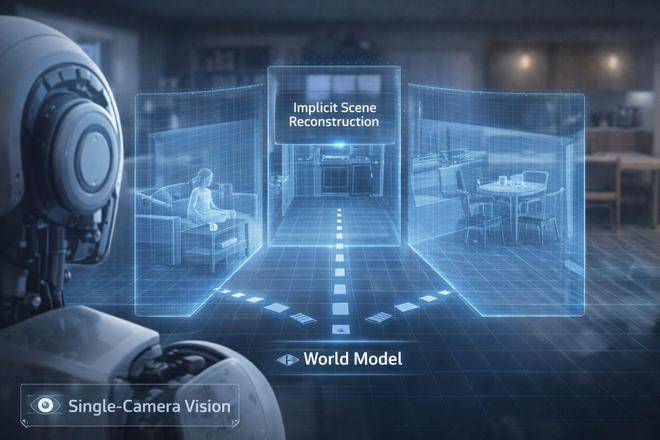

 京公网安备 11011402013531号